Introduction
In modern steelmaking, calcium metal cored wire has become an essential material for improving molten steel quality and final product performance. By enabling efficient calcium treatment, this wire serves as a powerful deoxidizing agent, desulfurizing agent and alloying element. The addition of calcium modifies the morphology and distribution of non-metallic inclusions in steel, significantly enhancing castability during continuous casting of aluminum-killed steels and effectively preventing nozzle blockage.
However, conventional methods for producing calcium metal cored wire have long faced technical challenges. This article presents an advanced, high-quality production process developed and manufactured by JINLI GROUP —— a leading producer and exporter of cored wires, ferroalloys and steelmaking related products. With years of expertise in the metallurgical industry, JINLI GROUP is committed to delivering innovative solutions that improve steel quality and production efficiency.
Why Calcium Treatment Matters in Steelmaking
Calcium plays a unique role in metallurgy. When added to molten steel, it:
- Reduces oxygen and sulfur levels
- Transforms elongated manganese sulfide inclusions into spherical calcium sulfides
- Prevents clogging of submerged entry nozzles
- Improves the mechanical properties and surface quality of final steel products
Despite these benefits, metallic calcium has low density, a low melting point (about 839°C) and a low boiling point (1484°C). Adding it directly as lumps causes violent reactions, high oxidation losses and poor recovery rates.
The Evolution of Calcium Metal Cored Wire Technology
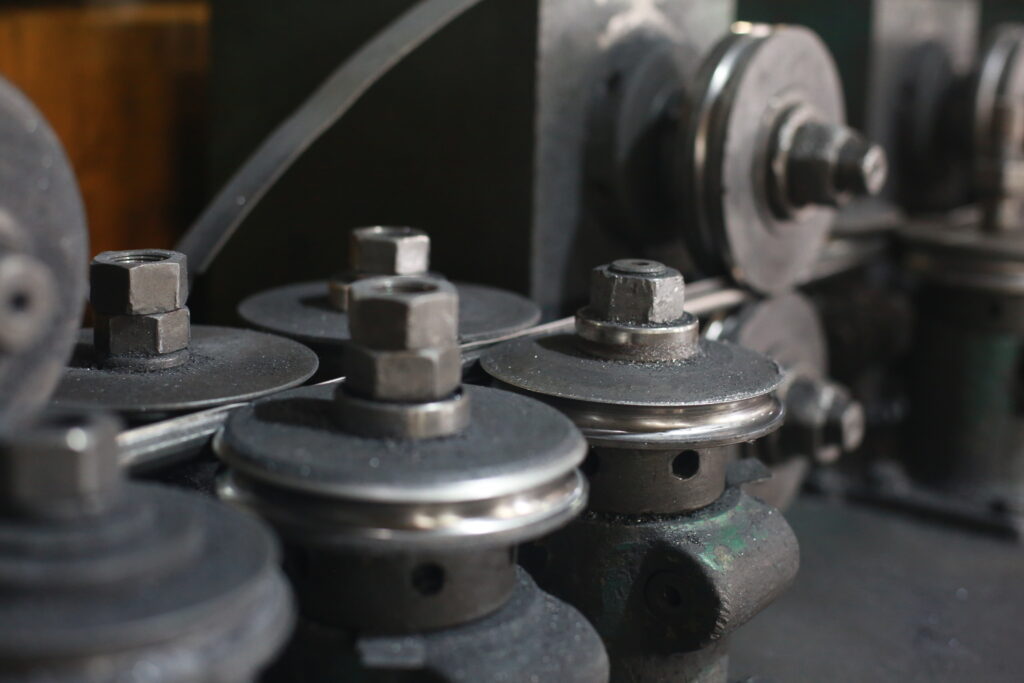
In the 1980s, the introduction of cored wire feeding technology was a breakthrough. A steel strip is folded around a core material —— either calcium granules or a solid calcium wire —— forming a composite wire that is fed mechanically into the molten steel. This method dramatically improves calcium yield and allows precise composition control.
Today, most manufacturers produce calcium metal cored wire using cold-rolled low-carbon steel strips filled with calcium powder or a mixture of calcium and iron powder. A smaller number use solid pure calcium wire as the core. However, these conventional approaches have significant drawbacks.
Limitations of Traditional Calcium Metal Cored Wire
1. Inconsistent Core Density
Powder or granular fillers leave voids between particles. This leads to uneven calcium distribution and uncontrolled addition rates during steelmaking.
2. Sealing and Oxidation Issues
Granular-filled wires must be perfectly sealed. Any leakage exposes calcium to air, causing rapid oxidation and loss of effectiveness.
3. Insufficient Mechanical Strength
The steel strip thickness in traditional wires is only 0.3–0.6 mm. Such weak wires begin reacting immediately upon contact with molten steel surface, failing to penetrate deep into the bath. Consequently, calcium reacts too quickly and incompletely. And it reduces absorption efficiency.
A New Production Method for High-quality Calcium Metal Cored Wire (by JINLI GROUP)
To address these shortcomings, the engineering team at JINLI GROUP has developed an innovative manufacturing process that produces a denser, stronger and more reliable calcium metal cored wire. The entire process is conducted under controlled conditions to prevent oxidation and ensure product consistency. Below is the step-by-step production method.
Step 1: Calcium Refining and Casting Under Vacuum
High-quality calcium metal is refined in a vacuum environment and then cast into solid rods or bars. This step eliminates impurities and ensures a dense, homogeneous structure without internal voids.
Step 2: Surface Passivation
The cast calcium rods undergo a passivation treatment that isolates the metal from ambient air, preventing surface oxidation during subsequent handling and storage.
Step 3: Steel Strip Preparation and Initial Wrapping
The inner surface of a low-carbon steel strip is coated with a high-temperature gasifiable material. Based on the required final wire diameter, a pure calcium wire of appropriate diameter is selected. The calcium wire is tightly wrapped with the coated steel strip. And the seam is welded in an oxygen-free atmosphere. This creates a hermetically sealed, semi-finished cored wire with uniform core density.
Step 4: Extrusion and Drawing in Anaerobic Environment
The semi-finished wire is heated in a horizontal furnace to a temperature range of 230–1100°C. It then passes through a horizontal extruder for compaction, followed by a drawing process to achieve the final dimensions.
All these operations are performed in an anaerobic environment to maintain calcium purity.
Step 5: Post-Forming Heat Treatment
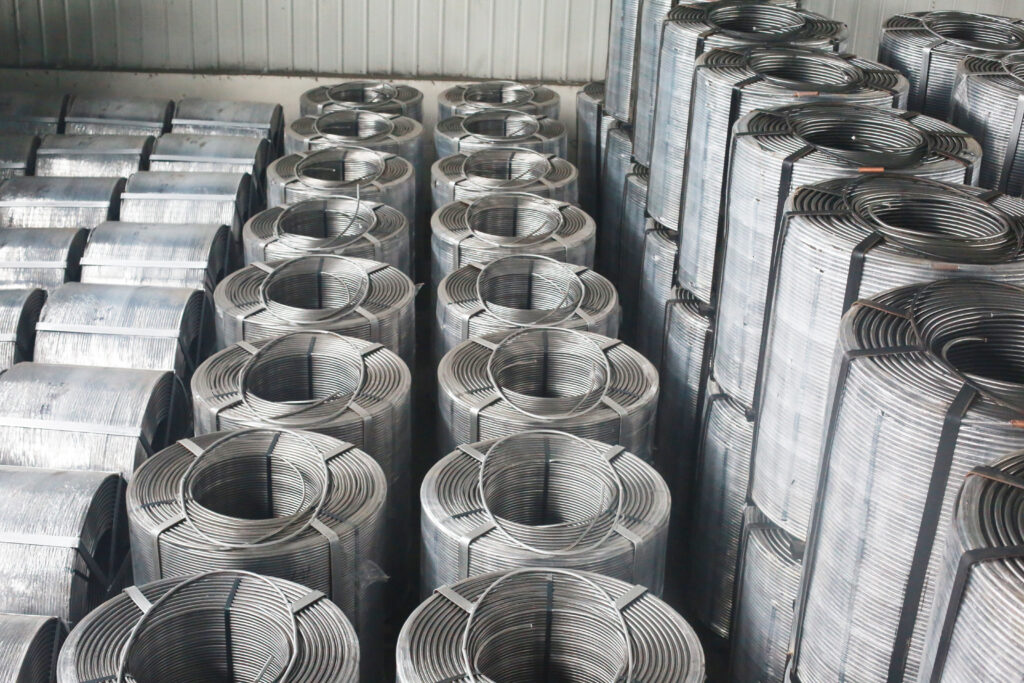
To further enhance mechanical strength, the finished wire undergoes a secondary heat treatment —— again in an oxygen-free atmosphere. After cooling, the wire is packaged for shipment.
Key Advantages of This Advanced Production Method
By eliminating internal voids, JINLI GROUP’s calcium metal cored wire penetrates slag layers easily, reaches the bottom of the molten steel bath and allows prolonged, complete calcium-steel reaction. The result is significantly improved calcium absorption and superior steel cleanliness.
About JINLI GROUP
JINLI GROUP is a professional manufacturer and exporter specializing in cored wires, ferroalloys and steelmaking related products. With a strong commitment to quality and innovation, JINLI GROUP serves steel producers worldwide, offering reliable solutions that enhance metallurgical processes and final product performance. Our expertise in calcium metal cored wire production is backed by advanced technology, rigorous quality control, and a customer-centric approach.
Conclusion
The newly developed production method for high-quality calcium metal cored wire represents a major advancement over conventional techniques. By delivering a denser, stronger and more oxidation-resistant product, JINLI GROUP enables steelmakers to achieve better process stability, higher calcium recovery and improved final product quality. For manufacturers aiming to produce premium steels with consistent performance, partnering with JINLI GROUP is a strategic step forward.
If you have any needs, please contact us without any hesitation!