Introduction: The Versatile Workhorse of Steelmaking
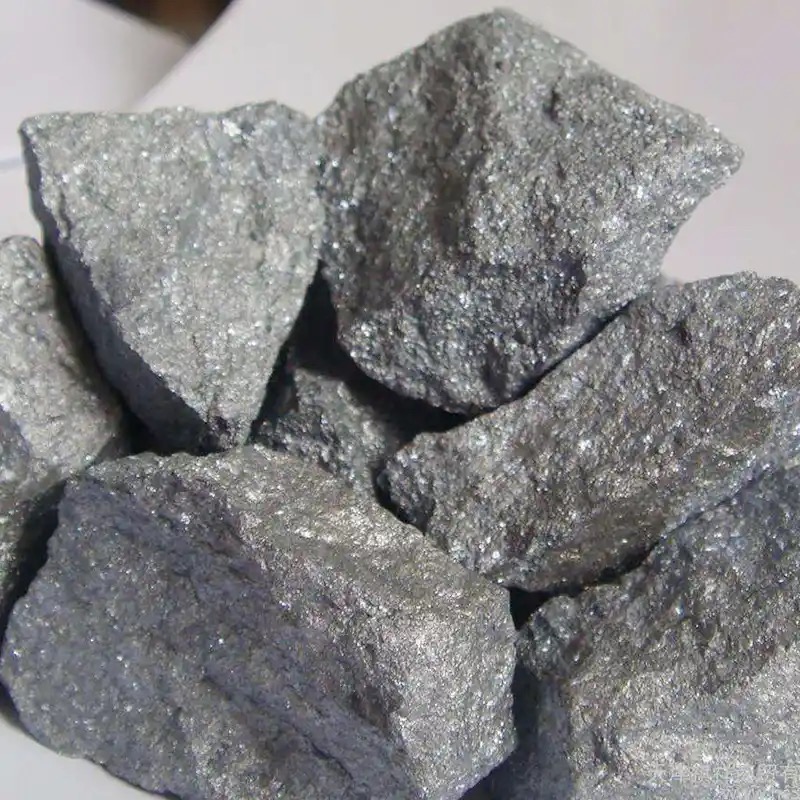
Calcium carbide (CaC₂) stands as one of the most transformative compounds in metallurgical history, bridging the gap between bulk chemistry and precision processing. This grayish-black crystalline substance, discovered accidentally by Thomas Willson in 1892 while attempting to produce aluminum, revolutionized multiple industries but found its most significant application in steelmaking. Today, as steel producers face unprecedented pressure to improve quality, reduce costs, and meet stringent environmental standards, understanding and optimizing calcium carbide applications has become more critical than ever. At Jinli Group, our experience with calcium carbide-based technologies spans decades, providing us with unique insights into its evolving role in modern metallurgy.
Chemical Fundamentals and Production
Calcium carbide is produced industrially through the reaction of quicklime (CaO) and coke (C) in an electric arc furnace at approximately 2,200°C:
CaO + 3C → CaC₂ + CO
The resulting product typically contains 80-85% CaC₂, with the remainder comprising calcium oxide, calcium sulfide, and other impurities. Its crystalline structure and reactivity are profoundly influenced by production parameters, including:
Raw material purity and particle size distribution
Furnace temperature profile and residence time
Cooling rate and subsequent processing
Industrial grades are classified by gas yield (liters of acetylene per kilogram) or by particle size distribution for metallurgical applications. The characteristic “garlic-like” odor upon exposure to moisture comes from acetylene generation:
CaC₂ + 2H₂O → Ca(OH)₂ + C₂H₂
Primary Applications in Steelmaking
1. Desulfurization: The Cornerstone Application
Calcium carbide’s strongest affinity in molten steel is for sulfur. The desulfurization reaction proceeds as:
CaC₂ + [S] → CaS + 2[C]
This reaction is highly efficient in reducing sulfur to ultra-low levels (<0.001%), crucial for:
Sour service pipeline steels (resisting H₂S corrosion)
High-toughness plate steels for critical infrastructure
Bearing steels requiring exceptional fatigue resistance
Advantages over alternatives:
Self-generating carbon eliminates carbon pickup concerns
Lower vapor pressure compared to pure calcium reduces fume generation
Exothermic reaction helps maintain steel temperature
2. Deoxidation and Inclusion Modification
While primarily known for desulfurization, calcium carbide also participates in deoxidation:
3CaC₂ + 5[O] → 3CaO + 6[C] + CO₂
The calcium oxide formed can combine with alumina inclusions, modifying them from harmful stringers to globular calcium aluminates. This transformation significantly improves:
Through-thickness properties in heavy plates
Machinability in engineering steels
Surface quality in automotive sheets
The carbon released during reactions provides controlled carburization, particularly valuable in electric arc furnace (EAF) operations where carbon content needs adjustment without introducing impurities.
Modern Delivery Systems: From Powder to Cored Wire
Traditional methods involved injecting calcium carbide powder with carrier gases, but this approach suffered from:
Low recovery rates (typically 15-25%)
Significant fume generation and environmental concerns
Inconsistent mixing and reaction kinetics
The evolution to calcium carbide cored wire has addressed these limitations through:
Technical Advantages of Cored Wire Format:
Recovery Improvement: 30-40% typical recovery, reaching 50% in optimized systems
Precision Targeting: Injection at optimal depths below slag layers
Reduced Environmental Impact: Minimal dust and fume generation
Process Integration: Compatibility with automated ladle metallurgy stations
Safety Enhancement: Eliminates risks associated with powder handling and storage
Wire Design Considerations:
Sheath Thickness: Controls dissolution rate and reaction kinetics
Core Composition: Blends of CaC₂ with CaSi or other modifiers for tailored performance
Diameter Selection: 9-16mm based on ladle capacity and treatment intensity
Process Optimization Parameters
Successful implementation requires careful control of multiple variables:
1. Temperature Management
Optimal range: 1,580-1,620°C for most applications
Below 1,550°C: Reduced reaction kinetics and carbide dissolution
Above 1,650°C: Excessive calcium vaporization and lining erosion
2. Slag Chemistry Control
Basicity (CaO/SiO₂) >3.0 to prevent silica reduction
Low FeO and MnO (<1%) to minimize oxidation losses
Appropriate viscosity for sulfur transfer
3. Injection Parameters
Carrier gas flow rates (argon preferred over nitrogen for ultra-low nitrogen steels)
Lance positioning and immersion depth
Injection rate relative to sulfur content and target levels
Comparative Analysis: Calcium Carbide vs. Alternative Desulfurizers
| Parameter | Calcium Carbide (CaC₂) | Calcium Silicon (CaSi) | Magnesium (Mg) |
|---|---|---|---|
| Sulfur Removal Efficiency | Excellent (to <10 ppm) | Good (to 20-30 ppm) | Excellent (to <10 ppm) |
| Reaction Kinetics | Moderate-Fast | Fast | Very Fast |
| Temperature Effect | Beneficial (exothermic) | Neutral | Problematic (endothermic) |
| Carbon Pickup | Yes (0.01-0.03%) | No | No |
| Cost per kg S Removed | Low-Medium | High | Medium-High |
| Inclusion Modification | Good | Excellent | Limited |
| Safety/Handling | Moderate (moisture sensitive) | Good | Challenging (pyrophoric) |
Environmental and Safety Considerations
Modern calcium carbide handling requires strict protocols:
Safety Measures:
Dry storage facilities with humidity control (<1% RH)
Closed transfer systems to prevent moisture contact
Proper ventilation in processing areas
Regular monitoring for acetylene accumulation
Environmental Controls:
Dust collection systems for powder handling
Fume extraction during injection
Spent material management (Ca(OH)₂ stabilization)
Sustainability Aspects:
Lower carbon footprint compared to some alternatives
Potential for byproduct utilization (acetylene for chemical synthesis)
Reduced slag generation compared to lime-based desulfurization
Economic Analysis and Operational Impact
The economic justification for calcium carbide usage extends beyond simple material costs:
Direct Benefits:
Reduced alloy consumption through improved recovery
Shorter treatment times increasing ladle turnover
Lower temperature losses reducing energy requirements
Extended refractory life through controlled reactions
Quality-Driven Economics:
Higher yields of premium-grade steels
Reduced downgrades and customer returns
Certification consistency for high-value applications
Market premium for consistently low-sulfur products
A typical mid-sized steel plant (2M tons/year) implementing optimized calcium carbide treatment can achieve:
Annual savings of $2-4M in desulfurization costs
15-25% reduction in sulfur-related quality issues
5-10% increase in production of premium pipeline steels
Future Directions and Innovations
The role of calcium carbide continues to evolve with emerging technologies:
Advanced Wire Technologies:
Multi-layer sheaths for staged reaction control
Nano-structured carbide particles for enhanced kinetics
Composite wires combining CaC₂ with rare earth elements
Process Integration:
AI-controlled injection based on real-time sulfur monitoring
Integration with ladle furnace slag optimization systems
Predictive models for endpoint sulfur control
Sustainability Initiatives:
Carbon capture from acetylene byproduct streams
Development of “green” production methods using renewable energy
Closed-loop systems for calcium recovery from slags
Best Practices for Implementation
Mills transitioning to or optimizing calcium carbide applications should consider:
Pilot Trials: Start with controlled experiments on specific steel grades
Comprehensive Training: Ensure operators understand both opportunities and risks
Monitoring Systems: Implement real-time process analytics
Vendor Partnership: Collaborate with experienced suppliers for technical support
Continuous Improvement: Regular review of performance metrics and adjustment of parameters
Conclusion: Strategic Value in Modern Steelmaking
Calcium carbide remains a cornerstone of efficient, cost-effective steel desulfurization despite the emergence of numerous alternatives. Its unique combination of chemical effectiveness, process flexibility, and economic efficiency ensures its continued relevance in an industry increasingly focused on precision and sustainability.
The key to maximizing its value lies not in treating it as a commodity chemical, but as a sophisticated process tool requiring careful integration into the broader metallurgical system. Through proper understanding of its characteristics, optimization of delivery methods, and integration with modern process control technologies, steel producers can leverage calcium carbide to achieve new levels of quality and efficiency.
At Jinli Group, we view calcium carbide not as a standalone product but as a critical component in the metallurgical toolkit. Our technical team specializes in helping mills optimize its application—from selecting the appropriate grade and delivery method to integrating it with complementary technologies for maximum impact. In an era where every element of steel production is scrutinized for both performance and sustainability, calcium carbide, when applied with precision and understanding, continues to deliver exceptional value.