In the relentless pursuit of higher quality, cleaner, and more reliable steel, modern secondary metallurgy relies on precise and efficient treatment methods. Among these, the use of calcium cored wire has become a cornerstone technology, primarily for the dual, interconnected purposes of deoxidation and inclusion modification. This process is not merely an additive step but a transformative one, fundamentally altering the nature of impurities to enhance final product properties.
The Core of the Matter: Understanding Calcium Cored Wire
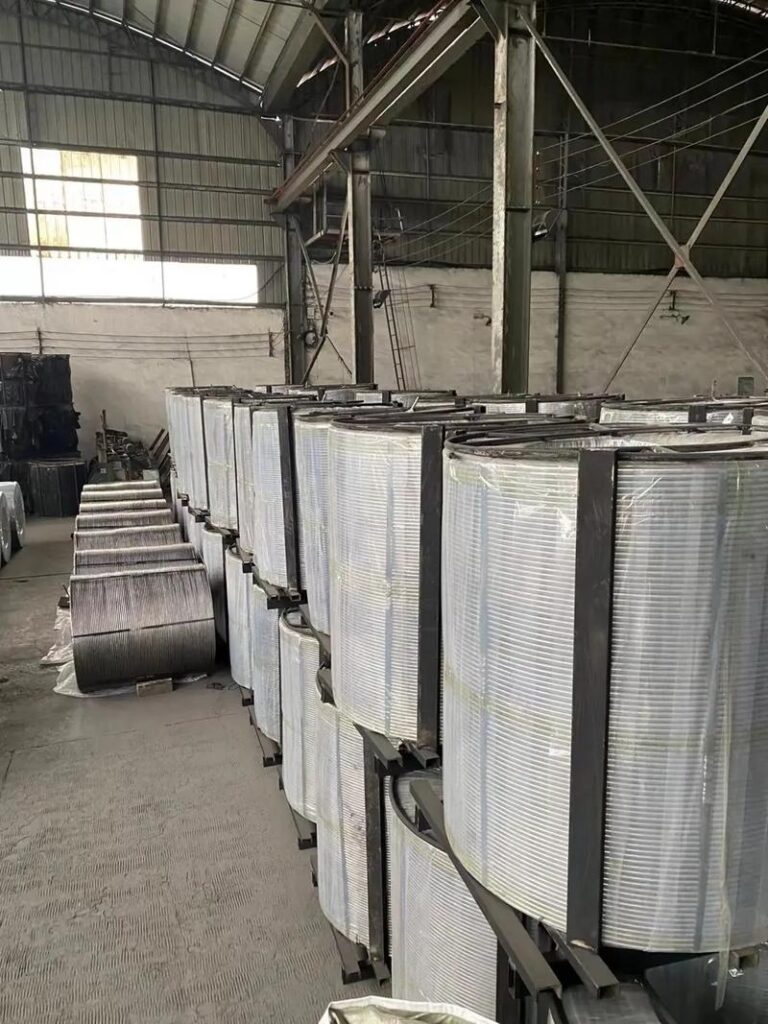
A calcium cored wire is a composite material consisting of a thin steel strip wrapped around a core of powdered calcium (or calcium alloys, such as CaSi). The wire is coiled and fed into the molten steel bath at a controlled speed and depth using a motorized feeder. This ingenious packaging serves two key functions: it protects the highly reactive calcium from premature oxidation in the air or slag, and it ensures deep, submerged delivery into the melt. Shallow injection would cause calcium to vaporize instantly (due to its low boiling point of 1484°C) and be lost, rendering the treatment ineffective.
Primary Function: Deep Deoxidation
While aluminum is a powerful and common deoxidizer, it forms solid alumina (Al₂O₃) inclusions. These inclusions, while removed in part by floating out, can form clustered, abrasive stringers that remain in the steel. They are detrimental, causing defects in casting (nozzle clogging) and impairing mechanical properties, particularly fatigue resistance and toughness.
The introduction of calcium wire addresses this issue through chemistry. Calcium has a higher affinity for oxygen than aluminum at certain temperatures. Upon injection, the dissolved calcium reacts with the solid alumina inclusions in a modification process:3Ca + Al₂O₃ → 3CaO + 2[Al]
This reaction transforms the solid, high-melting-point alumina (~2050°C) into liquid calcium aluminate inclusions. The exact composition (e.g., 12CaO·7Al₂O₃) melts at a much lower temperature (~1450°C). This phase change is the heart of inclusion modification.
The Benefits of Inclusion Modification
The shift from solid to liquid inclusions yields profound benefits:
Prevention of Nozzle Clogging: Liquid inclusions are less likely to adhere and sinter together in the submerged entry nozzle during continuous casting, ensuring a smoother, more stable casting process and improved yield.
Improved Mechanical Properties: Soft, globular liquid inclusions are far less harmful than hard, angular alumina clusters. They deform easily during rolling, forming elongated, less stress-concentrating shapes. This dramatically improves the isotropy of the steel—making properties more uniform in all directions—and enhances ductility, toughness, and fatigue life.
Sulfide Shape Control: Calcium also reacts with sulfur and existing manganese sulfide (MnS) inclusions, forming solid calcium sulfide (CaS) or oxy-sulfides. This prevents the formation of elongated, detrimental MnS stringers during hot rolling, further contributing to improved transverse toughness and reduced anisotropy.
Process Considerations and Challenges
Successful implementation requires precise control. The amount of calcium must be carefully calculated based on steel grade, aluminum content, and sulfur levels. An insufficient treat rate leaves unmodified alumina, while excessive calcium can lead to the reformation of high-melting-point calcium aluminates or cause excessive nozzle deposits. The “calcium yield”—the amount effectively dissolved in the steel—is often low and variable, influenced by factors like bath temperature, injection depth, and wire feed speed. Therefore, process optimization is continuous and vital.
Conclusion
The injection of calcium cored wire is a sophisticated and essential practice in the production of many high-grade steels, including linepipe, engineering, bearing, and forging grades. By enabling deep deoxidation and, more importantly, the modification of inclusions from harmful solids to less detrimental liquids, it directly addresses the internal “cleanliness” and microstructure of steel. This technology empowers metallurgists to tailor inclusion characteristics, transforming potential defects into manageable phases, and is a key enabler in meeting the ever-increasing demands for superior steel performance in the most challenging applications.