Abstract: Calcium treatment, primarily administered via cored wires, is a critical secondary refining process for producing high-quality steel. This article examines the latest advancements, performance data, and application trends of Calcium Ferrosilicon (CaFeSi) cored wires, focusing on their role in inclusion modification and sulphide shape control.
1. Metallurgical Imperative and Mechanism
The primary goal of calcium treatment in aluminum-killed steels is the modification of solid, abrasive alumina (Al₂O₃) inclusions into liquid calcium aluminates. This transformation is vital for preventing nozzle clogging during continuous casting and improving the isotropy of mechanical properties, particularly transverse impact toughness. Furthermore, calcium reacts with sulfur to form stable calcium sulfides or oxy-sulfides, preventing the formation of elongated, detrimental manganese sulfide (MnS) stringers during hot rolling—a process known as sulfide shape control.
The challenge lies in calcium’s high vapor pressure (1.8 atm at 1600°C) and low solubility in molten steel. Efficient delivery requires deep injection into the ladle to minimize oxidation and promote effective reaction. Cored wire technology provides the optimal solution.
2. Advanced Wire Design and Composition
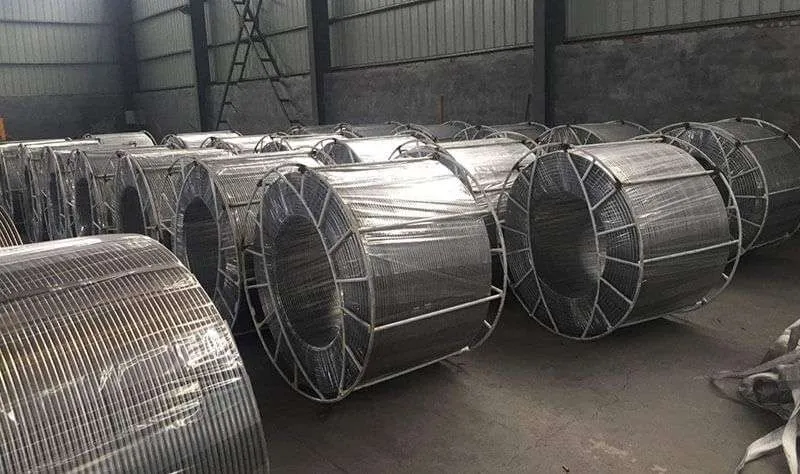
Modern CaFeSi cored wire is a composite product featuring a robust, cold-rolled mild steel sheath (typically 0.25-0.30 mm thick) encapsulating a precisely calibrated powder core. The core composition has evolved significantly:
Core Powder: The standard core is a blend of calcium silicide (CaSi, commonly Ca28Si60 or Ca30Si60) and iron powder. Recent trends focus on optimizing the Ca/Si ratio and incorporating stabilizing elements. High-performance wires now utilize alloys with 30-32% Ca content, as studies show this range optimizes the yield of soluble calcium for inclusion modification while maintaining economic efficiency.
Density & Fill Ratio: Advanced manufacturing ensures a high and consistent powder fill ratio (typically 86-92% by weight). The bulk density of the core powder is tightly controlled (approximately 2.1-2.3 g/cm³) to ensure predictable dissolution kinetics and wire feeding stability.
Sheath Integrity: The quality of the steel strip and the seam weld is paramount. New seam-welding techniques and stricter strip tolerances have reduced the rate of “pre-ignition” or breakage during feeding to below 0.5% in premium-grade wires.
3. Key Performance Metrics and Recent Data
Performance is quantified by calcium yield and treatment consistency, which directly impact cost and steel quality.
Calcium Yield: Defined as the percentage of injected calcium that is effectively assimilated into the steel for inclusion modification. For modern CaFeSi wire, effective yields range from 12% to 22%. The yield is highly dependent on process parameters: optimal immersion depth (ensuring release >1.5 m below the slag layer), precise argon stirring, and controlled wire feed speed (3-5 m/s is standard for 13mm diameter wire) are critical. Under optimized conditions, yields exceeding 18% are consistently achievable.
Inclusion Modification Index: The success of treatment is measured by the proportion of alumina inclusions converted to liquid or soft globular calcium aluminates. Aiming for >90% modification is standard for critical grades like pipeline (X70/X80) and bearing steels. Advanced process models now link wire addition rate (e.g., 0.3-0.6 kg Ca per ton of steel) to predicted final inclusion composition using thermodynamic software like FactSage.
Desulfurization Contribution: While not its primary role, calcium treatment can provide a complementary desulfurization effect of 10-20%, further enhancing steel cleanliness.
4. Industrial Application Trends and Selection Criteria
The selection of cored wire specifications is grade-specific:
High-Grade Flat Products (Automotive, Pipeline): Demand wires with higher, more consistent calcium content (Ca30Si60) and strict trace element control (low Al, C, S). The target is precise [Ca]/[Al] ratio control in the melt (often 0.08-0.12).
Long Products (Wire Rod, Rebar): May utilize cost-optimized wires with slightly lower Ca content, focusing primarily on castability improvement.
Trend towards Integrated Solutions: Leading suppliers now offer “wire + service” packages, including automated feeding systems with real-time monitoring and AI-driven predictive models for dosage calculation based on ladle analysis, aiming to reduce treatment cost by up to 15% through optimization.
5. Conclusion
Calcium Ferrosilicon cored wire remains the industry-preferred vehicle for reliable and efficient calcium treatment. Its continuous evolution—driven by advancements in powder metallurgy, sheath manufacturing, and process automation—ensures precise control over steel cleanliness and inclusion engineering. As demands for superior steel properties and production efficiency intensify, the role of high-performance, data-driven cored wire technology will only become more central to advanced steelmaking.