In modern steelmaking, the demand for high-purity, high-performance steel is continuously increasing, particularly for critical applications in automotive, aerospace, and precision engineering. One of the most persistent challenges in achieving this goal is the control of non-metallic inclusions—oxide, sulfide, and other impurities that compromise steel cleanliness, mechanical properties, and casting reliability. Cored wire injection technology has emerged as a precise, efficient, and metallurgically superior method to address this challenge. By delivering targeted alloys directly into molten steel, it significantly enhances steel cleanliness and optimizes continuous casting performance.
Understanding the Problem: Non-Metallic Inclusions and Casting Defects
Non-metallic inclusions originate from deoxidation products, slag entrapment, and re-oxidation during secondary steelmaking and casting. These inclusions, particularly alumina (Al₂O₃) clusters, can cause nozzle clogging during continuous casting, leading to operational delays, surface defects in the final product, and even breakouts. Sulfide inclusions, on the other hand, reduce ductility and toughness. Traditional bulk addition methods for inclusion modification, such as throwing ferroalloys onto the ladle surface, suffer from low and unpredictable alloy yield, high oxidation loss, and inadequate homogenization. This results in inconsistent steel quality and higher production costs.
The Cored Wire Solution: Precision Metallurgy
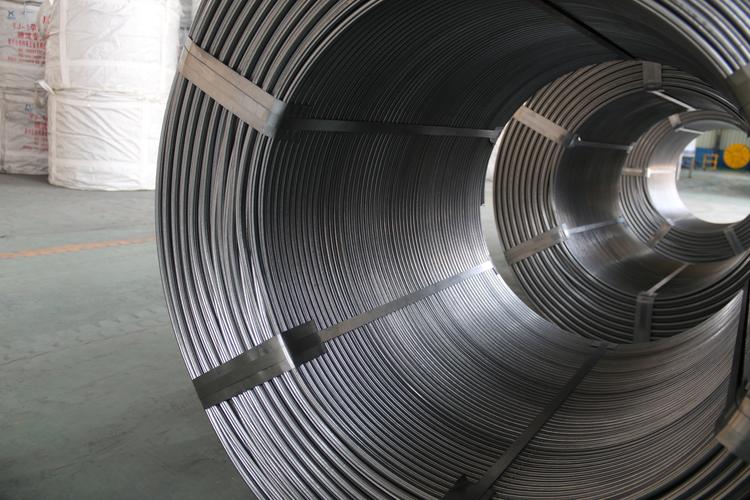
Cored wire injection involves feeding a metallic sheath filled with precise powdered alloys (e.g., Calcium Silicon, Calcium Ferro, Rare Earths) directly into the molten steel bath using a high-speed wire feeder. This method offers several transformative advantages:
Deep Injection and High Yield: The wire penetrates deep into the ladle or tundish, delivering the alloying agents below the slag layer and into the turbulent zone of the melt. This minimizes contact with air and slag, reducing oxidation losses. Alloy yields for active elements like Calcium can exceed 85-95%, compared to 10-30% with surface addition, ensuring cost-effectiveness and precise chemistry control.
Inclusion Modification and Morphology Control: This is the core benefit for cleanliness. Calcium treatment via cored wire is the most effective method for modifying solid, abrasive alumina inclusions (Al₂O₃) into liquid or soft calcium aluminates (12CaO·7Al₂O₃). These modified inclusions are less likely to cluster and clog submerged entry nozzles (SEN) during casting. They also become more globular and dispersed, significantly reducing their harmful effect on fatigue life and toughness in the final steel product.
Desulfurization and Sulfide Shape Control: Calcium also reacts with sulfur to form calcium sulfide (CaS) or oxy-sulfides, effectively reducing sulfur content and, more importantly, modifying the morphology of manganese sulfide (MnS) stringers. This transformation of sulfides from elongated, harmful types to more rounded, innocuous shapes dramatically improves the steel’s transverse ductility and machinability.
Direct Impact on Casting Performance and Operational Efficiency
The improvement in steel cleanliness has a direct and profound impact on casting operations:
Elimination of Nozzle Clogging: By preventing the formation of solid alumina buildups in the SEN, cored wire injection ensures a stable, predictable casting process. This reduces unplanned stoppages, increases sequence length (the number of heats cast continuously), and minimizes the risk of costly and dangerous breakout events.
Improved Surface and Internal Quality: Cleaner steel with finely dispersed inclusions leads to fewer surface defects (slivers, scabs) and internal flaws (lamellar tearing) in rolled products like sheets, plates, and coils. This enhances the yield of prime-grade steel and meets stricter customer specifications.
Enhanced Process Control and Consistency: The precise dosing capability of wire feeders allows for repeatable results from heat to heat. This consistency is vital for producing advanced high-strength steels (AHSS) and other grades with narrow compositional windows.
Case in Point: Real-World Results
A North American mini-mill producing low-carbon aluminum-killed steel for drawing and ironing (D&I) cans faced severe nozzle clogging, limiting casting sequences to 3-4 heats. After implementing a tailored Calcium Silicon cored wire injection program, they achieved:
Calcium yield increased from ~15% (bulk addition) to 92%.
Total Oxygen (T.O) content reduced by 35%, indicating superior deoxidation.
Nozzle clogging was virtually eliminated, enabling sequence lengths to extend beyond 8 heats.
Product rejections due to inclusion-related defects fell by over 60%.
Conclusion: A Strategic Investment for Quality Steelmaking
Cored wire injection is not merely an additive process; it is a strategic metallurgical tool for precision inclusion engineering. By ensuring deep, efficient, and controlled alloy addition, it directly tackles the root causes of poor steel cleanliness and unreliable casting. For steelmakers aiming to improve product quality, enhance operational efficiency, and reduce total cost of ownership, investing in optimized cored wire technology is a proven pathway to achieving cleaner steel and flawless casting performance.
Is your operation reaching its full potential for steel cleanliness and casting efficiency? Contact our metallurgical experts at Jinli Group for a free assessment of your cored wire application and discover a tailored solution for your specific steel grades.