Abstract
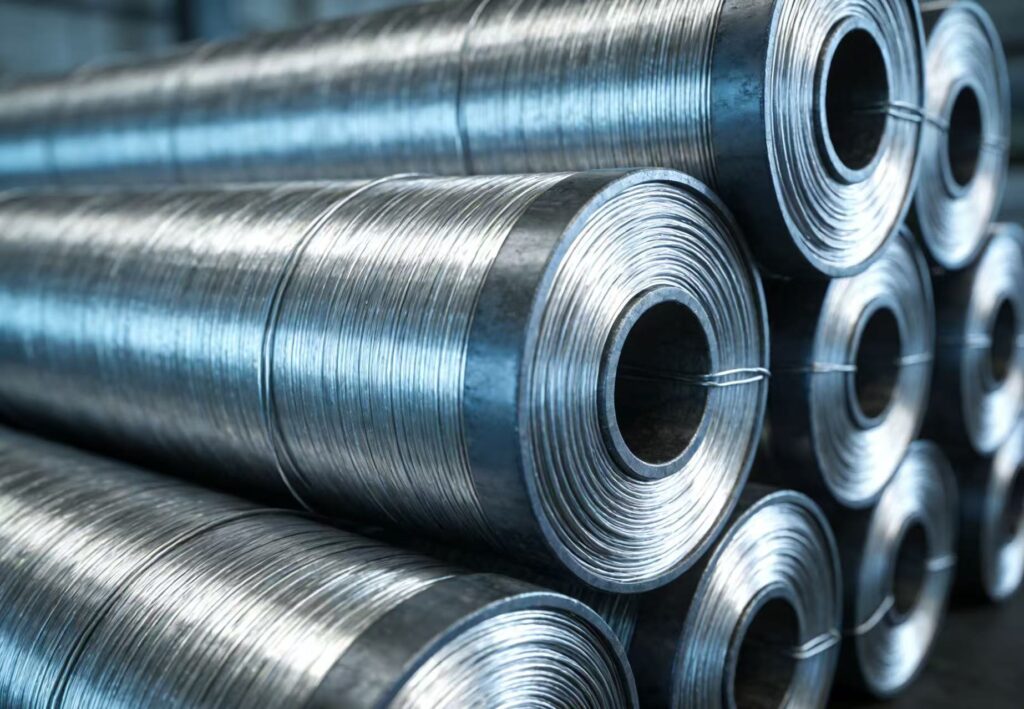
As the global steel industry pivots towards ultra-high purity standards and stricter cost-efficiency measures, the technology of cored wire injection remains a cornerstone of secondary metallurgy. Among the various wire grades, the Seamless Calcium Iron (FeCa) Cored Wire is witnessing a surge in demand. Its superior performance in modifying inclusions and preventing nozzle clogging is making it the preferred choice over traditional solid wires and seam-filled alternatives. This article analyzes the current market landscape, technological advantages, and future trajectory of Seamless FeCa wire in the 2026 global economy.
1. Market Dynamics and Valuation
The global cored wire market demonstrated resilience through the mid-2020s. By 2026, the market has stabilized, with the total value estimated between USD 3.7 billion and USD 3.8 billion. While the overall Compound Annual Growth Rate (CAGR) for cored wires hovers around 1.5% through 2035, the segment for seamless wires—particularly calcium iron variants—is outperforming this average significantly.
This growth is primarily driven by the Asia-Pacific region, which accounts for over 60% of global steel production. Countries like China, India, and South Korea are rapidly upgrading their continuous casting facilities, necessitating higher-grade calcium treatment to process complex steel grades for the automotive and renewable energy sectors.
2. Why Seamless? The Technical Edge in Today’s Mills
In 2026, steel mills are operating under immense pressure to reduce downtime. Traditional filled (seamed) wires face challenges with moisture absorption and oxidation during storage, leading to inconsistent calcium recovery.
The seamless manufacturing process—where a steel tube is drawn over a metal powder core—offers distinct advantages that align with current market needs:
Air Tightness: The hermetic seal prevents oxidation of the calcium (which is highly reactive) and the iron powder. This ensures that the wire remains “fresh” even in humid coastal mill environments.
Deep Injection Capability: The absence of a welded seam provides higher structural integrity, allowing the wire to withstand higher temperatures and penetrate deeper into the steel ladle. This maximizes the residence time, ensuring calcium vaporizes at the optimal depth for inclusion modification.
Consistent Recovery: Modern steel contracts often carry penalties for inclusion defects. Seamless FeCa wire offers a consistent calcium yield of 15-25%, allowing metallurgists to precisely control the morphology of Alumina (Al₂O₃) inclusions, transforming them into liquid calcium aluminates.
3. The Economic Reality: Price vs. Performance
A common barrier has been the higher upfront cost of seamless wire compared to traditional seamed wire. However, the 2026 market calculus has shifted. With energy costs remaining volatile, mills are calculating the Total Cost of Use (TCU) .
Reduced Consumption: Because seamless wire has higher and more predictable recovery rates, mills can use less wire to achieve the same metallurgical result.
Caster Productivity: By virtually eliminating nozzle clogging during continuous casting, seamless FeCa wire extends casting sequences, directly boosting plant productivity and reducing energy-intensive interruptions.
4. Future Outlook
Looking towards 2030, the market will likely see a push towards customized alloy blends within the seamless sheath. Furthermore, the integration of “Digital Twins” for wire injection—where sensors monitor the calcium activity and adjust the wire feed rate in real-time—will further solidify the role of high-quality FeCa wire in the steelmaking landscape.