In the intricate choreography of secondary steelmaking, precision is paramount. As the demand for ultra-clean steels with stringent mechanical properties escalates, the role of specific alloying agents and treatment methods has become more critical than ever. Among these, Calcium Wire has emerged not merely as an additive, but as a sophisticated engineering tool designed to modify inclusion morphology and enhance steel castability with unparalleled efficiency .
The Shift from Powder to Solid Core
Traditionally, calcium was introduced into molten steel via powder-filled cored wires, such as calcium-silicon (CaSi) or calcium-iron (CaFe) varieties. However, the evolution of steelmaking has driven a paradigm shift toward solid-core pure calcium wire. This innovation addresses a fundamental challenge: delivering reactive calcium deep into the liquid steel bath before it vaporizes.
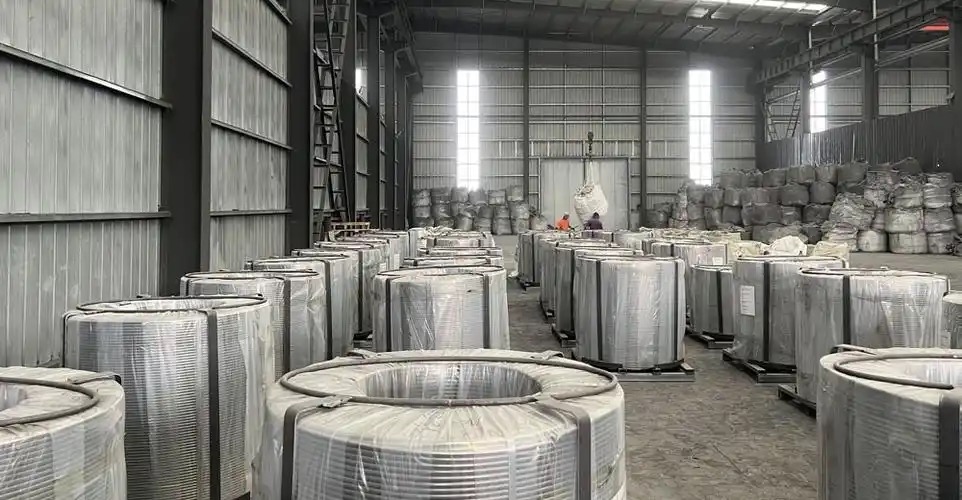
Modern high-purity calcium wire, typically with a diameter ranging from 7.5 mm to 9.5 mm and a calcium content exceeding 97%, is encased in a robust cold-rolled steel sheath . This design leverages the density differential; the solid core acts as a “carrier,” ensuring the wire penetrates the slag layer and reaches the turbulent depths of the ladle. This deep injection is crucial, as it maximizes the residence time of calcium in the molten steel, drastically improving the recovery rate of the element—a metric that can be as low as 10-15% with conventional powder wires but is significantly enhanced with solid-core variants .
The Science of Inclusion Modification
The true value of calcium treatment lies in its ability to transform harmful inclusions. In aluminum-killed steels, solid alumina (Al₂O₃) inclusions form, which have high melting points and tend to cluster at the submerged entry nozzle during continuous casting, leading to the dreaded “clogging.”
When high-purity calcium wire is fed into the melt, the metallic calcium vaporizes and dissolves, reacting with these alumina inclusions. The result is the formation of complex calcium aluminates (e.g., 12CaO·7Al₂O₃). Unlike solid alumina, these calcium aluminate compounds are liquid at steelmaking temperatures . This phase transformation from solid to liquid inclusions offers two distinct advantages:
Enhanced Castability: Liquid inclusions are less likely to adhere to refractory materials, effectively eliminating nozzle clogging and ensuring smooth, uninterrupted casting sequences .
Improved Mechanical Properties: By spheroidizing the inclusions and preventing the formation of elongated stringers in the final product, calcium treatment significantly improves the isotropy, toughness, and fatigue resistance of the steel .
Metrics of Efficiency: A Data-Driven Advantage
The adoption of high-quality calcium wire is justified by measurable metallurgical outcomes. Studies and industrial applications demonstrate that switching to solid-core pure calcium wire can reduce the required feed quantity by up to 50% compared to calcium-iron alternatives, while simultaneously increasing calcium yield by over 10% . Furthermore, because less wire is needed and the reaction is more efficient, the temperature drop of the molten steel during treatment is reduced by 3–5°C, preserving thermal energy for downstream processes .
Customization and Purity
At JINLI group, we recognize that no two steel grades are identical. Whether it is for pipeline steel requiring strict sulfide shape control (maintaining a Ca/S ratio ≥ 1.2) or for tire cord steel demanding absolute cleanliness, the specifications of the wire matter . Our calcium wire is produced with strict tolerances on diameter and density, ensuring a consistent feeding rate and predictable metallurgical behavior. We offer various diameters and packaging options, including argon-filled, hermetically sealed drums to prevent oxidation and guarantee shelf life, ensuring that the wire you receive is as reactive as the day it was manufactured .
In the pursuit of zero-defect steel, calcium wire is not just a consumable; it is a precision instrument.