Introduction
If you have ever worked on a ladle floor, you know that calcium treatment can be tricky. Pure calcium wire gets the job done, but it is expensive and sometimes too lively for certain steel grades. Over the years, many steel mills have turned to calcium iron cored wire – often called CaFe cored wire – as a middle-ground solution. It is not the strongest calcium carrier, but it is often the smartest choice for regular production.
At JINLI GROUP, we have manufactured and exported calcium iron cored wire for steel mills around the world. In this article, I will walk you through what CaFe cored wire really does, why it works and when you might want to use it – without any fancy tables or step‑by‑step production diagrams. Just practical information from one steel professional to another.
What Exactly is Calcium Iron Cored Wire?
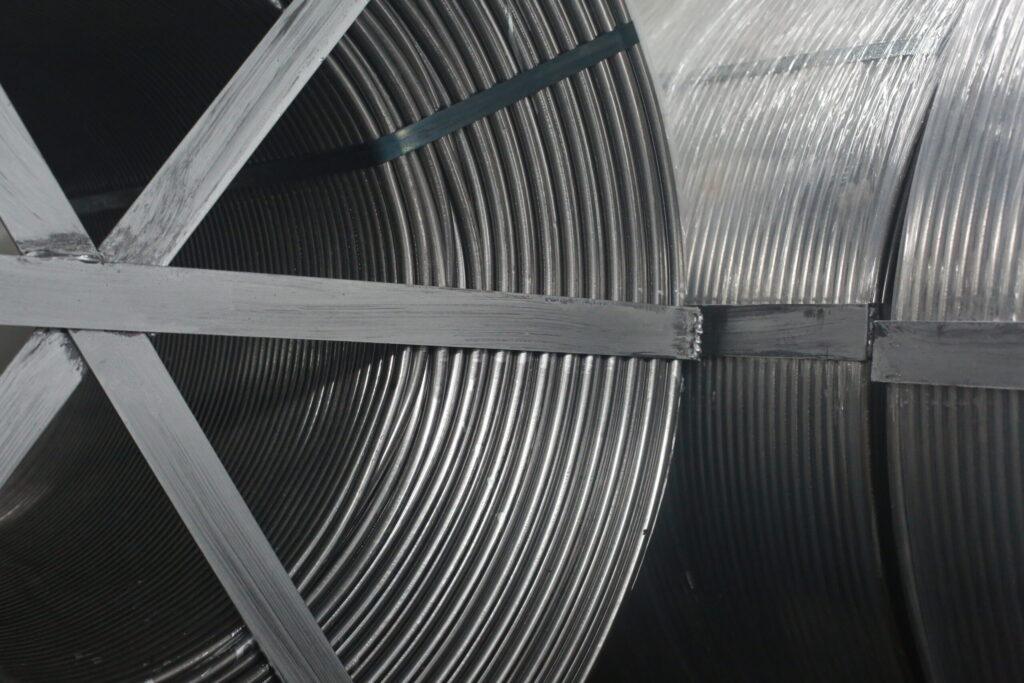
Let us start with the basics. Calcium iron cored wire is exactly what the name suggests: a steel strip wrapped around a core that contains both calcium metal and iron powder. The calcium content usually ranges from 25% to 35%, with iron making up the rest. The iron is not there as an alloying element – it acts as a filler and a moderator.
Why add iron? To begin with, iron is much denser than calcium. By mixing in iron powder, the overall density of the core increases. This helps the wire sink deeper into the molten steel bath before it starts to melt. Secondly, the iron powder dilutes the calcium, so the violent vaporization of calcium is tamed. Instead of a sudden burst, you get a slower, more controlled release of calcium. In addition, iron is cheap. Replacing some calcium with iron lowers the material cost per meter significantly.
So, in simple terms, calcium iron cored wire gives you a more economical, easier‑to‑handle calcium source that still does a decent job at inclusion modification and desulfurization.
How Does It Compare to Pure Calcium Wire?
This is the question we hear most often. Pure calcium wire contains over 97% calcium. It is powerful, but a lot of that power goes to waste. Because calcium boils at around 1484°C, pure calcium wire tends to vaporize as soon as it enters the molten steel. A good portion of the calcium turns into gas and escapes before it can react with sulfur or oxygen.
Now, here is the interesting part. Calcium iron cored wire often achieves a higher calcium recovery than pure calcium wire, even though it contains less calcium to begin with. Why? Because the iron helps the wire reach the bottom of the ladle and the slower reaction gives the calcium more time to dissolve and react. Many steel mills report that switching from pure calcium to CaFe cored wire did not reduce the effectiveness of their calcium treatment. And in some cases, it actually improved consistency.
Of course, there are limits. If you need very deep desulfurization (below 0.003% sulfur) or you are making high‑end automotive or pipeline steels, pure calcium or calcium silicon cored wire may still be necessary. But for a large portion of carbon steels, rebar, sections and many aluminum‑killed grades, CaFe cored wire works perfectly well.
When Should You Reach for CaFe Cored Wire?
Let me give you a few real‑world scenarios where calcium iron cored wire makes a lot of sense.
First of all, if you are producing ordinary carbon steels or construction steels where the main goal is to improve castability and reduce nozzle clogging, CaFe cored wire is usually sufficient. You do not need the full power of pure calcium.
Secondly, when your ladle furnace practice runs on a tight budget, CaFe cored wire helps lower the cost per ton. Because the wire is cheaper per meter, you can afford to be a little more generous with the feeding length without breaking the bank.
Thirdly, if your wire feeder or your operators struggle with the violent reaction of pure calcium – which can cause spattering, smoke and inconsistent penetration – then CaFe cored wire is a much friendlier option. The reaction is calmer and the feeding process becomes more predictable.
Another situation is when you use a hybrid approach. Some steelmakers feed a small amount of pure calcium wire first for deep treatment, followed by CaFe cored wire for final adjustment or maintenance. This combination gives you the best of both worlds: strength when you need it, economy for the rest.
What About Desulfurization and Inclusion Control?
A common misconception is that calcium iron cored wire is only for cost saving and does not really clean the steel. That is not true. Calcium, whether delivered as pure wire or mixed with iron, will still react with sulfur to form calcium sulfide and with alumina to form liquid calcium aluminates. The chemistry does not change.
What does change is the efficiency. Because CaFe cored wire delivers calcium more slowly and deeper in the ladle, the contact time with the steel is longer. In many cases, these results in more complete reactions. Steelmakers using CaFe cored wire often see well‑rounded inclusions and a significant reduction in clogged nozzles.
However, you cannot expect the same performance if you simply replace pure calcium wire meter for meter with CaFe cored wire. You may need to adjust the feeding length. For example, if you used 200 meters of pure calcium wire with 97% calcium, you might need 250 to 300 meters of a 50% CaFe cored wire to deliver the same amount of calcium – but because recovery is often higher, the actual adjustment is something you will need to test on your own shop floor. JINLI GROUP’s technical team can help you with initial estimates.
Practical Tips from the Mill Floor
Over the years, we have collected some practical advice from customers who use our calcium iron cored wire. I will share a few points that might save you some trial and error.
Firstly, pay attention to the calcium‑to‑iron ratio. 30/70 CaFe cored wire is very mild and cheap, suitable for steels that only need a light calcium touch. There is no single “best” ratio – it depends on your steel grade and your goals.
Then, feeding speed matters more than you think. Because CaFe cored wire is denser, you may be able to feed it slightly faster than pure calcium wire without losing penetration. But do not overdo it. Start with your usual feeding speed, then adjust based on the reaction at the ladle surface and the calcium recovery you measure from samples.
Furthermore, store the wire properly. The iron powder in the core can absorb moisture if the coils are left in a damp area. Moisture leads to hydrogen pickup, which can cause pinholing or embrittlement. Keep the wire in a dry, covered warehouse and use it within six months if possible.
Why JINLI GROUP for Your Calcium Iron Cored Wire?
You might be wondering: why choose JINLI GROUP over other suppliers? The answer is simple: we treat cored wire as a serious technical product, not just a commodity. Every batch of calcium iron cored wire we produced is checked for core density, sealing quality and chemical consistency. We do not guess – we measure.
We also understand that every steel mill is different. That is why we offer custom ratios, diameters (typically 9 to 13mm), strip thicknesses and coil sizes. If you need CaFe cored wire, we can do that.
And we do not just sell you cored wire and walk away. Our team can provide feeding recommendations, help you troubleshoot reactions and even work with you to design a trial plan. We have been exporting cored wires for years, so we also know how to package the product properly for sea freight – moisture‑proof and secure.
Conclusion
Let me wrap this up. Calcium iron cored wire is not a miracle product, but it is a very sensible one. It balances cost and performance, gives you better calcium recovery than pure wire in many cases and makes the operator’s job easier with a calmer reaction. For a wide range of ordinary and semi‑engineered steel grades, it is the right tool for the job.
At JINLI GROUP, we have built our reputation on delivering reliable cored wires that work as promised. Our calcium iron cored wire is no exception. Whether you are a large integrated mill or a smaller special steel producer, we can supply the right CaFe cored wire for your needs – and help you use it effectively.
If you want to give it a try, or if you simply have more questions, reach out. We are here to help you make better steel.
If you have any needs, please contact us without any hesitation!