When most people in the steel industry hear calcium carbide, they think of ladle desulfurization in steelmaking. That is the largest application and it is where most of the technical discussion focuses. But calcium carbide has another life in hot metal treatment and foundry work, where the conditions are different and the requirements are different.
In a steel ladle, temperatures are above 1600°C and the steel is fully liquid. In a hot metal torpedo car or ladle, the temperature is lower, often 1300°C to 1400°C and the chemistry is different. The sulfur levels are usually higher and the carbon content is already near saturation. Calcium carbide behaves differently in this environment and the way you use it changes accordingly.
This article looks at how calcium carbide is used outside the steel ladle, what makes it effective for hot metal and foundry applications and what to check when you buy calcium carbide for these purposes.
Why Calcium Carbide Works for Hot Metal Desulfurization
Hot metal from the blast furnace typically contains 0.030% to 0.050% sulfur, sometimes higher. Before the metal goes to the basic oxygen furnace, many mills desulfurize it to below 0.010% or even lower. This reduces the sulfur load on the steelmaking process and allows the production of low sulfur steels.
Calcium carbide is a common reagent for this job. The chemistry is straightforward. Calcium carbide reacts with sulfur in the hot metal to form calcium sulfide and carbon. The calcium sulfide is stable and floats up into the slag, where it can be removed. The carbon that is released goes into the metal, which is not a problem because hot metal is already carbon saturated.
The reaction is exothermic, meaning it releases heat. In hot metal, that is helpful because it helps maintain temperature. In steel, the same reaction would be too violent. That is one reason calcium carbide is more popular for hot metal than for steel.
Another reason is cost. Calcium carbide is cheaper per unit of sulfur removed than many alternative reagents. For hot metal desulfurization, where the sulfur load is high, cost matters a great deal.
How Calcium Carbide Is Added to Hot Metal
There are two main methods for adding calcium carbide to hot metal. The choice depends on the equipment available and the target sulfur level.
Injection through a lance is the most common method for deep desulfurization. The calcium carbide is ground to a fine powder and injected into the hot metal through a refractory-coated lance. The carrier gas is usually nitrogen. The powder reacts with the sulfur as it rises through the metal. This method gives good contact between the reagent and the metal and it can achieve low sulfur levels.
Top addition is used for less demanding applications. The calcium carbide is added to the surface of the hot metal, usually in a ladle or a torpedo car. The material is stirred in by the natural movement of the metal or by a mechanical stirrer. Recovery is lower than with injection, but the equipment is simpler and cheaper.
Some foundries use a combination of both methods. They inject a portion of the calcium carbide for deep desulfurization, then add more on top for final adjustment.
What Makes a Good Calcium Carbide for Hot Metal
Not all calcium carbide is the same. For hot metal desulfurization, the key properties are particle size, gas yield and purity.
Particle size is critical for injection. The calcium carbide must be ground to a fine powder, typically below 0.5 mm, so it can be carried by the gas stream and penetrate the metal. If the particles are too coarse, they will not fluidize properly and will not react completely. If they are too fine, they may cause dusting and handling problems.
Gas yield is a measure of the acetylene produced when the carbide reacts with water. A higher gas yield means more calcium carbide per unit weight and therefore more desulfurization capacity. Steelmaking grade calcium carbide usually has a gas yield of 280 to 300 litres per kilogram. For hot metal, the same grade is suitable.
Purity matters for two reasons. On one hand, impurities dilute the calcium carbide, so you need more material to achieve the same sulfur removal. On the other hand, some impurities can affect the slag or the metal chemistry. For hot metal, the most important impurity to control is phosphorus, because phosphorus can revert to the metal and cause problems in steelmaking.
Foundry Applications for Calcium Carbide
In foundries, calcium carbide is used for different purposes than in steel mills. The most common uses are desulfurization of cast iron and as a source of carbon.
Desulfurization of cast iron is similar to hot metal desulfurization. The calcium carbide reacts with sulfur to form calcium sulfide, which is removed in the slag. Ductile iron and compacted graphite iron require very low sulfur, often below 0.015% and calcium carbide is an effective way to achieve that.
Carbon addition is a secondary benefit. The carbon released from the calcium carbide reaction goes into the iron, which helps maintain the carbon level. In some foundries, calcium carbide is used partly as a carbon raiser, although it is not as efficient as dedicated recarburizers.
Slag control is another use. The calcium oxide formed from the calcium carbide helps build a basic slag, which is beneficial for desulfurization and for protecting the refractory lining.
Foundries usually use coarser calcium carbide than steel mills, often in the range of 1 to 5 mm. The material is added to the ladle or the furnace and stirred in. Injection is less common in foundries because the equipment is more expensive and the volumes are smaller.
Quality Checks for Hot Metal and Foundry Calcium Carbide
When you receive calcium carbide for these applications, a few simple checks will tell you whether the material is suitable.
Check the gas yield. If you have the equipment, measure the acetylene produced from a known weight of carbide. If the gas yield is below 260 litres per kilogram, the material is low grade or has degraded. Do not use it for critical desulfurization.
Sieve a sample. For injection, the material should pass through a 0.5 mm screen with minimal oversize. For top addition, a coarser material is acceptable, but too much fines will cause dusting.
Calcium carbide reacts with moisture to form acetylene and calcium hydroxide. If the material feels damp or has a white powder on the surface, it has degraded. Reject it.
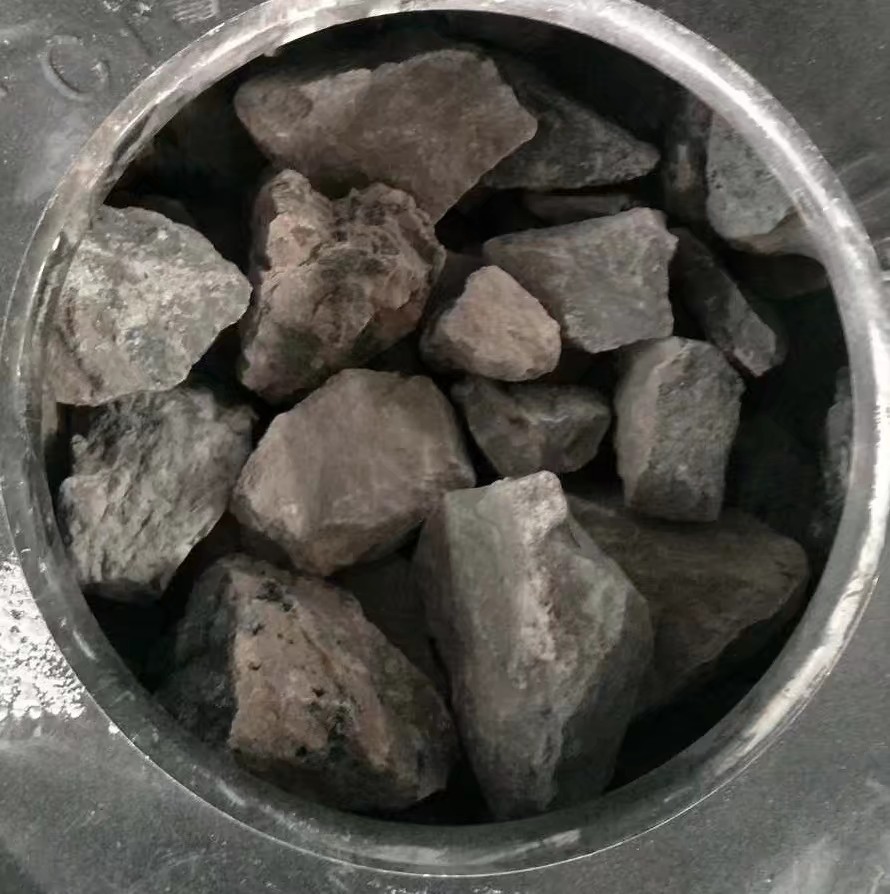
Fresh calcium carbide is greyish black with a slightly metallic sheen. If it looks dull or has a brownish tint, it may have oxidised or absorbed moisture.
Storage and Safety
Calcium carbide must be stored dry. When it contacts water, it produces acetylene gas, which is flammable and can form explosive mixtures with air. The storage area should be well ventilated, away from sources of ignition and protected from rain and humidity.
Bags should be kept on pallets, off the concrete floor and covered with a tarp. Opened bags should be resealed or used promptly. Do not store calcium carbide near acids or oxidising agents.
For a broader overview of desulfurization practices in hot metal and steel, you can refer to technical resources from industry knowledge platforms like ISPAT Guru.
Common Problems and Solutions
Let me share a few problems that come up in hot metal and foundry applications.
Low sulfur removal efficiency. If the sulfur does not drop as expected, check the injection depth. The lance should be deep enough to get the calcium carbide below the slag layer. If the lance is too shallow, the reagent reacts with the slag instead of the metal.
Fine calcium carbide can create dust during handling and injection. This is not only a health hazard but also a loss of material. Use a well-graded product and consider a dust collection system.
In some hot metal treatments, the slag can foam excessively. This is usually caused by too much gas generation or by a slag composition that is too viscous. Adjust the injection rate or the slag composition.
After desulfurization, the sulfur can revert to the metal if the slag is not removed promptly. Make sure the slag is skimmed or the metal is tapped in a way that leaves the sulfur-rich slag behind.
Summary
Calcium carbide is a versatile reagent. It is not only for steel ladles. In hot metal treatment and foundry work, it provides cost effective desulfurization and helps control sulfur to the low levels required for quality castings and steelmaking.
The key is to choose the right particle size and to store the material dry. Check the gas yield on arrival and inspect for moisture. Use the material promptly and follow proper safety practices.
If you need calcium carbide for hot metal or foundry applications, talk to us. We supply consistent quality and can help you select the right grade for your process.
If you have any needs, please contact us without any hesitation!