Introduction
Walk into any steel plant that produces heat-treatable grades or specialty steels and you will hear about boron. Not because chemists love complicated elements, but because ferro boron that is added in minute quantities can dramatically improve hardenability. A few thousandths of a percent of boron can replace much larger amounts of expensive alloying elements like chromium, molybdenum or nickel.
At JINLI GROUP, we supply ferro boron to steelmakers who need tight control over boron addition. This article is about what ferro boron does, why you would choose it and what to watch out for. No unnecessary steps, no repetitive formulas – just a straightforward look at a powerful but subtle additive.
What’s Ferro Boron? Why Is It Special?
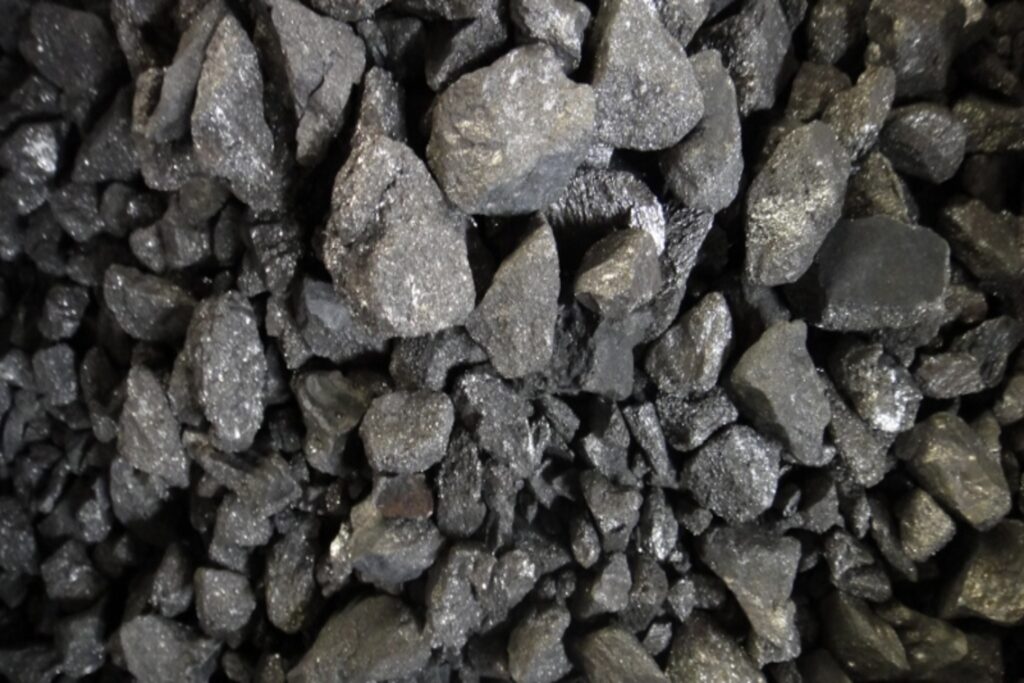
Ferro boron (FeB) is an alloy of iron and boron, typically containing 15% to 20% boron, though lower and higher grades exist. The balance is mostly iron, with small amounts of silicon, aluminum, carbon and sometimes titanium. It comes as irregular lumps or crushed granules, ready for addition to the ladle or mold.
Now, what makes boron special? In steel, boron segregates to the prior austenite grain boundaries. There, it suppresses the formation of ferrite and pearlite, allowing bainite or martensite to form even at slower cooling rates. In plain language, boron increases the hardenability of steel dramatically – sometimes by as much as several hundred times compared to boron-free steel.
Here is the catch: the effect works only when the steel is properly deoxidized and when nitrogen is tied up. Boron has a strong affinity for oxygen and nitrogen. If free oxygen or nitrogen is present, boron forms oxides or nitrides instead of doing its grain boundary job. That is why ferro boron is almost always added after full deoxidation (usually with aluminum and titanium) and often together with a nitrogen-fixing element like titanium or zirconium.
How Much Boron Do You Actually Need?
This is where ferro boron surprises many engineers. The effective range is extremely narrow – typically 0.0005% to 0.0030% (5 to 30 ppm) residual boron in the steel. Below 5 ppm, you see almost no effect. Above 30 ppm, you risk hot shortness, embrittlement and even a decrease in hardenability due to the formation of continuous grain boundary precipitates.
Put another way, one kilogram of 19% ferro boron adds about 190 grams of boron. To reach 20 ppm in 100 tons of steel, you need only about 1 kilogram of ferro boron. That is a tiny sack of material affecting a whole heat. The precision required is unusual for a bulk additive, which is why consistent quality in ferro boron matters tremendously.
When Should You Use Ferro Boron?
Steelmakers reach for ferro boron in several clear situations.
Firstly, when designing low-alloy steels that require high hardenability without the cost of chromium, molybdenum or nickel. Automotive parts like gears, crankshafts and connecting rods often use boron microalloying. Instead of adding 0.5% chromium or 0.2% molybdenum, a much cheaper boron addition achieves similar through-hardening.
Secondly, for case-hardening or quenched and tempered steels where the core hardenability needs a boost without altering surface carbon potential. Boron works in the background; it does not interfere with carburizing or nitriding processes.
Another important use is in high-strength low-alloy (HSLA) steels. Boron improves the strength and toughness balance after controlled rolling and cooling. Many pipeline and structural steels rely on boron for consistent properties in thick sections.
Finally, some specialty foundries add ferro boron to cast irons to increase the hardness of pearlite and refine the structure. This is a smaller market, but it highlights the versatility of the element.
What Happens When Boron Goes Wrong?
Because the window for boron addition is so narrow, mistakes are costly. At JINLI GROUP, we always remind customers that ferro boron quality is not just about chemistry – it is about predictability.
If the steel still contains oxygen when you add boron, the boron forms boron oxide, which is useless for hardenability and may even act as an inclusion. That is why the addition should always come after aluminum killing and ideally, after titanium or zirconium treatment to fix nitrogen.
If you overdo the addition, excessive boron leads to the formation of iron-boron eutectics along grain boundaries. This makes the steel brittle during hot working – a phenomenon called “boron embrittlement” or “hot shortness.” In severe cases, the steel cracks during rolling or forging.
Another problem is inconsistent recovery. Boron recovery depends on the timing, the ladle slag composition and the temperature. Without a consistent ferro boron product and a stable practice, your hardenability can vary from heat to heat. That is undesirable for any quality-controlled steel grade.
What to Look For in Ferro Boron from a Supplier
Not all ferro boron is the same. The difference between a good product and a poor one shows up in three areas.
The first area is boron content consistency. A high-quality ferro boron will have a tight specification, for example 18-20% boron, with minimal variation between batches. Cheap material may range from 14% to 22%, making your addition calculations unreliable.
The second area is the presence of fine powder. Ferro boron tends to generate dust during crushing and handling. Excessive fines can cause oxidation and recovery losses because fine particles react with air or moisture before they enter the steel. Reliable suppliers screen the product to control the dust.
The third area is the level of impurities, especially aluminum, titanium and phosphorus. While some aluminum and titanium are beneficial (they help tie up oxygen and nitrogen), too much can change the steel’s microstructure unpredictably. Good ferro boron has balanced, stable impurity levels.
Practical Tips for Adding Ferro Boron
Based on feedback from customers who use ferro boron successfully, here are some pointers that have stood the test of time.
Always add ferro boron after complete deoxidation. The standard sequence is: tap the steel, add aluminum for killing, add titanium or zirconium if needed, then add ferro boron at the very end of tapping or into the ladle under good stirring. Avoid adding earlier.
Use a sharp, clean addition. Break the ferro boron into pieces about 20-50 mm in size. Too large and they may not dissolve completely; too small and you risk dust loss. Many mills bag the ferro boron in small paper sacks and throw them into the ladle stream.
Keep the ladle slag basic and reducing. A high MnO or high FeO slag will oxidize boron before it dissolves. A good ladle slag (CaO-Al₂O₃ with low FeO) protects the addition.
Check your recovery periodically. Do a mass balance on boron. If recovery drops below 70%, look for oxygen or nitrogen problems or issues with the addition point.
Why JINLI GROUP for Ferro Boron?
We at JINLI GROUP have been in the business of ferroalloys and cored wires for years. Ferro boron is one of the products where we know that consistency is everything. We supply material with stable boron content, controlled particle size and low moisture absorption. Each batch is analyzed by an independent lab and the certificate accompanies the shipment.
More importantly, we understand that you are not just buying a chemical analysis. You are buying the ability to hit your hardenability target every single heat. That is why we also offer technical support – not to tell you how to run your mill, but to help you integrate our product smoothly into your existing practice.
Our packaging options include steel drums or big bags, all water-proof for ocean transport. We export to steel mills and foundries across Asia, Europe and the Americas.
Conclusion
Ferro boron is a small addition but a powerful tool. It allows steelmakers to produce high-hardenability steels without the high cost of traditional alloying elements. The key is precision – in the quality of the ferro boron itself, in the timing of the addition and in the control of oxygen and nitrogen in the steel.
At JINLI GROUP, we take that precision seriously. Whether you need standard 19% ferro boron or a custom grade, we deliver a product that helps you get the most out of every gram of boron. And we stay available to answer questions, solve problems and adjust to your needs.
If you are producing quenched and tempered steels, gears, shafts or high-strength structures, it may be time to look at ferro boron. Contact JINLI GROUP for a sample, a quote or just a conversation about what works best for your shop.
If you have any needs, please contact us without any hesitation!