
Introduction
If you buy recarburizer for steelmaking, you know there are choices. The two most common are CPC or calcined petroleum coke and GPC or graphitized petroleum coke. They look similar. They both add carbon to steel. But the price difference can be significant, often 20% to 40% more for GPC.
The question is not which one is better in absolute terms. The question is when the extra cost of GPC actually pays off. This article helps you make that decision based on your steel grades, your quality requirements and your casting practice.
At JINLI GROUP, we supply both CPC and GPC. We do not push one over the other. Instead, we help customers understand the trade offs and choose the right product for their specific needs.
The Basic Difference That Matters
Both CPC and GPC start from the same raw material: green petroleum coke. The difference is in the heat treatment.
CPC is calcined at around 1300°C to 1400°C. This drives off volatile matter and gives a dense carbon product with about 98.5% fixed carbon. It is a good, workhorse recarburizer.
GPC goes through an additional step. It is heated above 2500°C in a graphitization furnace. At that temperature, the carbon atoms rearrange into a more ordered, graphite like structure. This changes several properties: the nitrogen content drops much lower, the sulfur content drops, the dissolution speed increases and the carbon recovery becomes more consistent.
Those differences matter for certain steel grades. For others, they are irrelevant.
Where GPC Justifies Its Higher Price
Let us start with the situations where GPC is clearly the better choice.
Low nitrogen steel grades are the most common reason to choose GPC. CPC typically contains 300 to 800 ppm nitrogen. GPC can be below 100 ppm, sometimes as low as 50 ppm. If your final steel requires nitrogen below 60 ppm, CPC will struggle to meet that specification. Every kilogram of CPC you add brings in nitrogen. With GPC, the nitrogen contribution is negligible.
This is especially important for aluminum killed steels used in automotive exposed panels, deep drawing grades and certain pipe steels. Nitrogen in those grades causes strain aging, reduces ductility and can lead to surface defects.
Very low sulfur requirements also favor GPC. CPC sulfur content ranges from 0.3% to 0.8%, depending on the source. GPC can achieve 0.03% to 0.05% sulfur. If you are producing steel with sulfur below 0.005%, the sulfur from CPC can be a problem. GPC adds almost no sulfur.
Fast dissolution is another advantage. The graphitic structure of GPC is more easily wetted by molten steel, so it dissolves faster than CPC. If your ladle treatment time is short or if you add recarburizer in the ladle rather than in the furnace, GPC gives you more complete dissolution before casting. Undissolved carbon particles in the final steel are a quality defect.
Consistent recovery is also better with GPC. Because the structure is more uniform and the impurities are lower, the carbon recovery from heat to heat is more predictable. For mills running tight carbon specifications, this consistency is valuable.
When CPC is Still Good Enough
Now let us look at the other side. CPC is a perfectly adequate product for a wide range of steel grades.
If you produce carbon steel, rebar, structural sections or most ordinary flat products, the nitrogen and sulfur levels in CPC are not a concern. Those grades do not have tight nitrogen specs and the sulfur from CPC is small compared to the total sulfur from scrap and other alloys.
If you add recarburizer in the electric arc furnace during melting, the long residence time gives CPC plenty of opportunity to dissolve. The faster dissolution of GPC is not needed.
If your steel specification allows some variation in carbon content, the slight difference in recovery consistency between CPC and GPC may not matter. CPC recovery is typically 85% to 92% in a furnace and 75% to 85% in a ladle. Those numbers are good enough for most mills.
And of course, CPC costs less. If you do not need the extra purity or faster dissolution, paying for GPC is simply wasting money.
The Real Cost Comparison
Comparing CPC and GPC by price per ton is misleading. The right comparison is cost per effective carbon delivered, adjusted for recovery and for the cost of any quality problems.
Here is an example. Suppose CPC costs $800 per ton and GPC costs $1100 per ton. That is a 37% premium. If you add 100 kg of CPC to a heat and achieve 85% recovery, you get 83 kg of effective carbon. To get the same effective carbon with GPC at 92% recovery, you need only 90 kg. The GPC cost per heat is $99 versus $80 for CPC. Still more expensive, but the gap narrows.
Now factor in quality. If the CPC adds 15 ppm nitrogen and your customer rejects the coil for nitrogen related surface defects, the cost of that rejection dwarfs the recarburizer price difference. For critical grades, GPC is often cheaper in the long run because it reduces rejections.
What to Check When You Receive GPC
If you decide to use GPC, verify a few things on arrival.
To begin with, check the certificate for nitrogen content. The supplier should provide a number, not a range like “below 200 ppm.” Ask for the actual analysis from the specific batch.
Secondly, check the particle size. GPC is available in different sizes, from fine powder to 5 mm granules. Make sure the size matches what you ordered. Too much fine material can cause dust losses. Too coarse can slow dissolution.
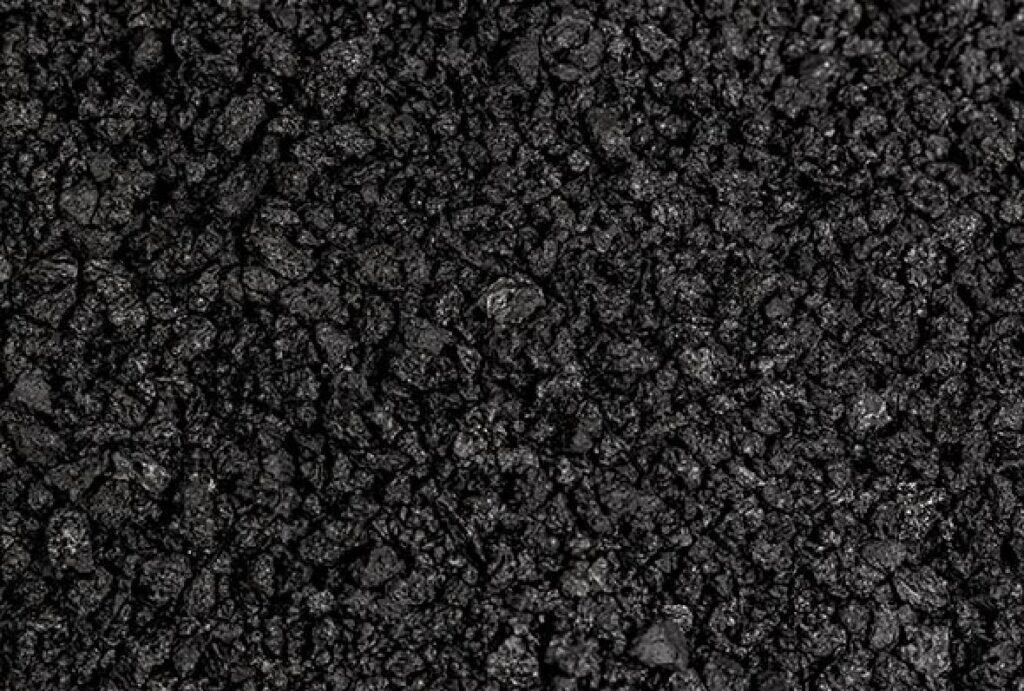
What’s more, look at the appearance. Good GPC is dark gray with a slight metallic sheen, reflecting the graphitic structure. If it looks dull or powdery, the graphitization may not have been complete.
Finally, run a test heat. Compare the carbon recovery and the nitrogen pickup against your historical data with CPC. That is the only way to confirm the GPC is delivering the promised benefits.
Storage and Handling
GPC is less reactive than CPC because the graphitization process removes more volatile matter. But it still needs reasonable care. Store bags on pallets, off the floor and covered. Moisture is not as critical as with CPC, but wet GPC can still cause hydrogen pickup in the steel. Keep it dry.
Because GPC is more expensive, pay attention to dust losses during handling. Use closed conveyors or pneumatic systems where possible. Every kilogram of GPC that ends up in the dust collector is money wasted.
A Few Words About Hybrid Practices
Some mills use a combination of CPC and GPC. They add CPC in the furnace for bulk carbon adjustment, where the longer residence time gives it time to dissolve. Then they use GPC in the ladle for final trimming, where the fast dissolution and low nitrogen matter most.
This hybrid approach gives you the cost benefit of CPC for the bulk addition and the purity benefit of GPC for the critical last step. It is worth considering if you produce a mix of ordinary and high grade steels.
Why JINLI GROUP Offers Both
We supply both CPC and GPC because we want to serve the whole market. Some customers need the premium product. Others need the economical one. Both are valid choices.
Our GPC comes from established graphitizing plants with consistent quality. We check each batch for nitrogen, sulfur and particle size before shipping. Our CPC is also tightly controlled. Both products meet international standards.
If you are unsure which type to use, we can help you set up a trial. We will supply a sample of each and you can run your own comparison under your actual conditions. That is the only way to know for sure.
Conclusion
GPC is a premium product for premium applications. It gives you lower nitrogen, lower sulfur, faster dissolution and more consistent recovery. CPC is a reliable workhorse for ordinary steel grades where those benefits are not needed.
The right choice depends on your product mix, your quality requirements and your cost targets. If you produce critical grades with tight nitrogen or sulfur specs, GPC is worth the extra cost. If you produce standard grades, CPC will serve you well.
Either way, JINLI GROUP can supply what you need. Contact us to discuss your specific situation or to arrange a trial comparison. We will help you make the right decision.
If you have any needs, please contact us without any hesitation!


2 回复
评论被关闭。