Introduction
Calcium carbide is one of those materials that has been around forever. Every steelmaker knows what it does. It desulfurizes, it deoxidizes and it is cheaper than most alternatives. Yet not every mill gets good results from it. Some see sulfur drop reliably heat after heat. Others struggle with inconsistent recovery and wonder why.
The difference is rarely the carbide itself. It is usually how it is added, when it is added and what condition the slag is in.
At JINLI GROUP, we supply calcium carbide to mills that use it for ladle desulfurization, furnace reduction and occasional inclusion control. This article focuses on the practical side: how to use calcium carbide so that it actually works and how to avoid the mistakes that waste your money.
The Starting Point: Know Your Carbide Grade
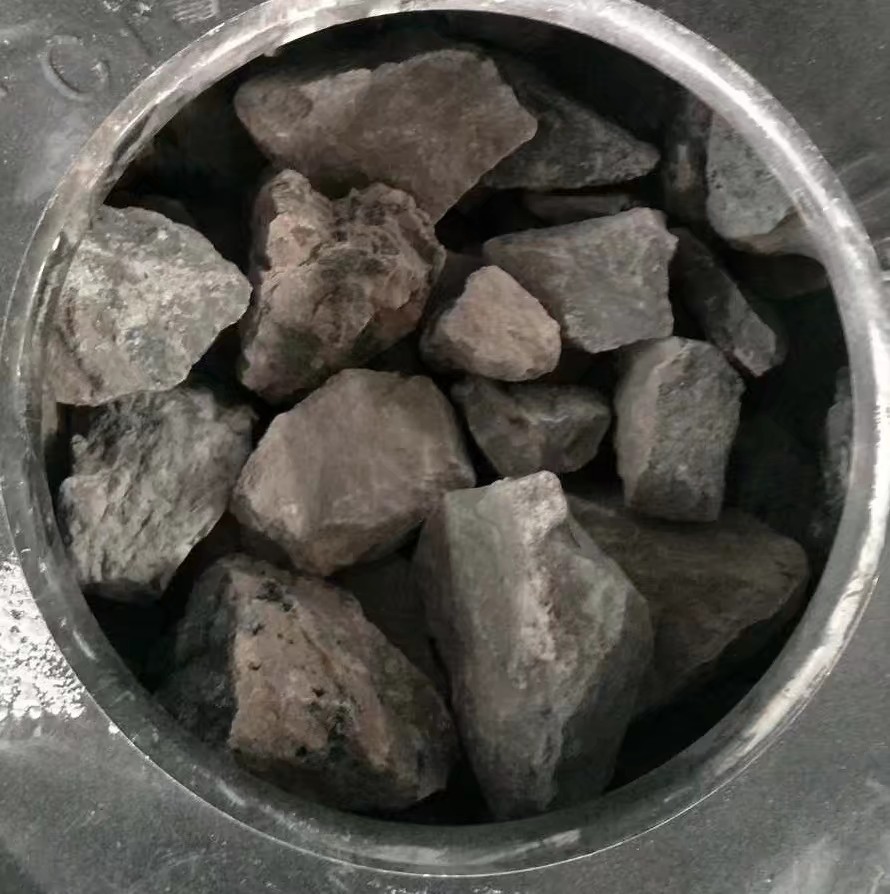
Not all calcium carbide is the same. The most important number on the spec sheet is the gas yield, usually expressed as litres of acetylene per kilogram of carbide. A typical steelmaking grade has a gas yield of 280 to 300 L/kg. Lower than that means more impurities, which means less effective calcium for desulfurization.
The other thing to check is particle size. Carbide for ladle addition usually comes in 1 to 5 mm or 2 to 8 mm granules. Carbide for injection needs finer material. If you order the wrong size, you will see poor recovery because the material either floats on the slag or settles at the bottom too slowly.
Some suppliers offer carbide with higher gas yield but coarser size. Others offer lower yield but very consistent granules. There is no universal best. The best grade depends on your addition method and your steel grade.
Where to Add Carbide for Best Effect
The addition point is the single biggest factor in carbide recovery. Let us look at the three common options and how they compare.
In the ladle during tapping is the most common method. The carbide is added to the ladle before the steel stream hits or during the tap. The turbulence of tapping mixes the carbide into the steel. This gives the best recovery, often 70% to 85% for desulfurization. The key is to add it early in the tap, not at the end. If you add it at the end, there is not enough time for mixing and reaction.
In the ladle furnace is another option. The carbide is added after the slag is formed and the steel is heated. Recovery is slightly lower, around 60% to 75%, because the slag is thicker and the carbide has to penetrate through it. However, you have more control over timing and can adjust based on the sulfur analysis.
In the electric arc furnace during the reduction period is a traditional practice that still works. The carbide is added to the furnace slag to reduce iron oxide and lower the oxygen potential before tapping. This helps with phosphorus removal as well. Recovery is variable but usually acceptable because the residence time is long.
What does not work is throwing carbide on top of a thick, oxidizing slag in the ladle. The carbide will react with the slag instead of the steel. You will see a lot of bubbling but very little sulfur drop. If you have to add carbide into a thick slag, use a lance to inject it below the surface or add it before the slag builds up.
The Slag Factor That Everyone Ignores
This is the part that many operators overlook. Carbide does not desulfurize steel directly in most cases. It works by reducing the slag. The calcium from carbide reacts with the slag, making it more basic and more reducing. That changed slag then draws sulfur out of the steel.
So if your slag is already highly reducing, the carbide has less work to do. If your slag is oxidizing, the carbide gets consumed before it can help desulfurization.
A simple rule: check your slag colour before adding carbide. If it is black, it has too much FeO. Add some aluminum or silicon to reduce it first, then add carbide. If it is white or gray, the slag is already in good condition and the carbide will work efficiently.
Also pay attention to the slag volume. Too little slag means not enough capacity to absorb the sulfur that comes out of the steel. Too much slag means you need more carbide to treat it. A slag volume of 30 to 50 kg per ton of steel is a typical range for carbide desulfurization.
How Much Carbide Do You Actually Need
The addition rate depends on the starting sulfur, the target sulfur and the slag condition. A typical range is 0.5 to 2 kg per ton of steel. For a 100 ton heat with 0.030% sulfur aiming for 0.010%, you might need 80 to 120 kg of carbide.
But do not just follow a fixed recipe. Adjust based on the sulfur drop you actually see. If you add 100 kg and the sulfur drops from 0.030% to 0.012%, that is good. If it only drops to 0.020%, you need more carbide or a better slag.
Keep records of how much carbide you add and what sulfur drop you get. Over time, you will develop a correlation that works for your specific practice. That is more reliable than any textbook number.
Common Mistakes and How to Fix Them
Let me share a few errors that we see repeatedly in mills that struggle with carbide recovery.
Adding carbide too late. If you add it in the last five minutes before casting, there is not enough time for the reaction to complete. The sulfur will not drop and the carbide will end up as inclusions. Add carbide at least 10 to 15 minutes before casting, preferably earlier.
Adding carbide on top of slag without mixing. If you just dump the bag on the surface, the carbide stays in the slag layer and burns off. Use a lance or add during tapping when the steel stream provides natural mixing.
Using carbide in a ladle with high oxygen activity. If the steel is not properly deoxidized, the carbide will react with oxygen instead of sulfur. Make sure the steel is killed with aluminum before adding carbide.
Forgetting about temperature. Carbide desulfurization is temperature sensitive. At lower temperatures, the reaction is slower. If your ladle steel is below 1550°C, you may need more carbide or longer treatment time.
How to Check Carbide Quality on Arrival
Most mills rely on the supplier certificate, but you can do a few simple checks yourself.
Firstly, look at the colour. Fresh calcium carbide is grayish black with a slightly metallic sheen. If it looks dull brown or has white powder on the surface, it has absorbed moisture and degraded. That material will have lower gas yield.
In addition, check the dust content. Take a sample and sieve it. If more than 5% passes through a 1 mm screen, there are too many fines. Those fines will oxidize quickly and reduce your effective carbide.
Furthermore, do a simple gas test. Drop a small piece of carbide into a glass of water. It should bubble vigorously. If the bubbling is weak, the carbide has degraded or is low grade. Be careful with this test; do it in a well ventilated area because acetylene is flammable.
At JINLI GROUP, we test every batch for gas yield, particle size and moisture content. The certificate is accurate, but we encourage you to do your own spot checks.
Storage and Handling Reminders
Calcium carbide reacts with moisture to produce acetylene gas. This is both a quality issue and a safety issue.
Store carbide in a dry warehouse, on pallets, off the floor. Never leave bags exposed to rain. When you open a bag, reseal it if you do not use all the material. Carbide that sits open for days in humid conditions will degrade noticeably.
Do not store carbide near heat sources or sparks. The acetylene that slowly releases from carbide can form explosive mixtures with air. Standard safety practices for carbide handling are not optional.
When Carbide Is the Right Choice
Carbide is not always the best tool. But it is a very good choice in several situations.
If you need a cost effective desulfurizer for ordinary carbon steel grades, carbide is hard to beat. The material cost is lower than most calcium based alloys.
If you do not have a wire feeder for calcium treatment, carbide gives you a way to modify sulfides without expensive equipment.
If you have a ladle furnace with good slag practice, carbide works consistently and predictably.
If your sulfur target is not extremely low, say above 0.005%, carbide can usually get you there with a reasonable addition rate.
For very low sulfur steels below 0.003%, you may need a combination of carbide and other desulfurizers or a different approach altogether.
Conclusion
Calcium carbide is a reliable tool when used correctly. It is not fancy and it does not need complex equipment. But it does need attention to detail: the right grade, the right addition point, the right slag condition and enough time for the reaction to work.
If you have been getting poor recovery, look at your slag first. Then look at your addition timing. Then check your carbide quality. One of those three is usually the problem.
At JINLI GROUP, we supply calcium carbide that meets consistent specifications. We can help you set up a trial, compare different grades and adjust your practice for better results. If you want to get more out of your carbide, we are ready to help.
If you have any needs, please contact us without any hesitation!