
Introduction
Pure calcium cored wire is the strongest tool in the calcium treatment toolbox. It delivers more calcium per meter than any other cored wire product and its effect on inclusions is unmatched. But that power comes with a price, both in dollars and in handling difficulty.
Many steelmakers default to pure calcium wire out of habit. They have used it for years and see no reason to change. Others avoid it because of the cost and the fussy feeding behavior. The truth is somewhere in between. Pure calcium wire is not always the right choice, but in some cases nothing else will do.
At JINLI GROUP, we supply pure calcium cored wire alongside our other products. We want our customers to use the right tool for the job, not the most expensive one and not the cheapest one either. This article helps you decide when pure calcium wire is necessary, when you can substitute and how to use it effectively if you choose it.
What Pure Calcium Wire Does That Others Cannot
Every steelmaker knows that calcium modifies inclusions. But the mechanism matters. Calcium reacts with alumina to form liquid calcium aluminates at steelmaking temperatures. Those liquid inclusions are much less likely to clog nozzles than solid alumina particles.
Pure calcium wire gives you the highest concentration of calcium per meter of wire. A typical pure calcium wire contains around 97% calcium. A calcium silicon wire contains about 30% calcium and a calcium iron wire can be anywhere from 30% to 70%. So if you need a large, rapid dose of calcium, pure wire delivers it most efficiently.
More importantly, pure calcium wire provides the strongest modifying effect on inclusions. For steels that require extremely clean inclusion populations, such as certain bearing steels, spring steels or specialty alloys, the weaker calcium delivery from other wires may not be sufficient.
When You Absolutely Need Pure Calcium Cored Wire
Let us look at the specific cases where pure calcium wire is the right tool.
Very low sulfur steels are one example. If your target is below 0.003% sulfur, you need every bit of calcium to react with sulfur. The dilution of calcium in other wires means you have to feed much more wire to achieve the same effect. Pure calcium gives you the most calcium per meter, which is important when you are trying to push sulfur to extremely low levels.
Tight inclusion control for critical applications is another. Automotive exposed panels, pipeline steels for sour service and certain aerospace grades require very clean steel with no harmful inclusions. Pure calcium wire gives the strongest modification effect, turning alumina into liquid calcium aluminates more completely than lower concentration wires.
When you have limited ladle space or treatment time, pure calcium wire lets you deliver a large amount of calcium quickly. If your ladle is already full and you cannot add much wire or if your treatment time is short, pure calcium gives you the most effect per meter.
When the steel is very hot, pure calcium wire is actually easier to use. At higher temperatures, the calcium vaporizes more quickly. Lower concentration wires may not deliver enough calcium before the reaction stops. Pure calcium gives you more calcium to work with in the short time available.
When You Should Consider Switching
Now let us look at the cases where pure calcium wire may not be the best choice.
If your calcium recovery is consistently below 15%, something is wrong with your practice. But if you have tried everything and still see low recovery, you might actually get better results from calcium silicon or calcium iron wire. Those products release calcium more slowly, giving it more time to react before vaporizing.
If you are producing ordinary carbon steel grades with moderate sulfur and inclusion requirements, pure calcium wire is overkill. A calcium silicon or calcium iron wire will do the job at lower cost. The extra purity from pure calcium is not needed for these grades.
If your operators struggle with the violent reaction of pure calcium wire, the calmer reaction of CaSi or CaFe wire may improve consistency. A less dramatic feeding process is easier to control and less stressful on equipment.
If storage conditions are poor, pure calcium wire degrades faster than other wires. The pure calcium core reacts with moisture more readily. If your warehouse is humid, you might get better shelf life from CaSi or CaFe wire.
Cost Comparison That Makes Sense
Comparing pure calcium wire with other wires by price per meter is misleading. A pure calcium wire costs more per meter, but it contains more calcium. The proper comparison is cost per unit of effective calcium delivered.
Let us run an example. Suppose pure calcium wire costs $0.60 per meter with 97% calcium and 20% recovery. A CaSi wire costs $0.35 per meter with 30% calcium and 25% recovery. Per meter, the pure wire delivers 0.194 kg of effective calcium (97% × 20%). The CaSi wire delivers 0.075 kg per meter (30% × 25%). The pure wire gives more than twice the effective calcium per meter, but it costs less than twice as much. On a cost per effective calcium basis, the pure wire may actually be more economical, even though it costs more per meter.
The numbers change depending on recovery. If your pure calcium recovery drops to 10%, the economics shift dramatically. That is why improving recovery is the most important lever for pure calcium wire users.
How to Know If Your Pure Calcium Wire Is Good Quality
Not all pure calcium wire is the same. The calcium metal itself can vary in purity and the wire manufacturing affects feeding performance.
The first thing to check is the calcium purity. Good pure calcium wire has 97% to 99% calcium. The balance is mostly magnesium and trace impurities. If the purity is below 97%, you are paying for calcium but getting other elements. Those impurities can affect your steel chemistry.
The second thing to check is the steel sheath quality. The strip thickness should be uniform, typically 0.4 to 0.6 mm. The welding should be smooth and continuous. If the weld is rough or has gaps, the wire may leak powder or break during feeding.
The third thing to check is the coiling. The wire should come off the coil smoothly with no kinks or tangles. A poorly wound coil will cause feeding interruptions that waste time and money.
At JINLI GROUP, we supply pure calcium wire with consistent purity and smooth coiling. Each coil is checked before shipping. We also provide the analysis certificate with every shipment.
Practical Tips for Pure Calcium Cored Wire Users
If you decide to stick with pure calcium cored wire, here are a few things that will help you get better results.
Feed the wire as deep as possible. The ferrostatic pressure at depth helps keep calcium in liquid form longer. If your guide tube allows it, aim for at least 2.5 meters below the slag surface.
Adjust feeding speed based on steel temperature. Hotter steel melts the sheath faster, so you need higher speed to reach depth. A good test is to measure the remaining end after feeding. Adjust until the remaining end is between 200 and 400 mm.
Keep the slag thin and basic. A thick slag or an oxidizing slag will consume calcium before it reaches the steel. Reduce slag thickness before feeding if possible.
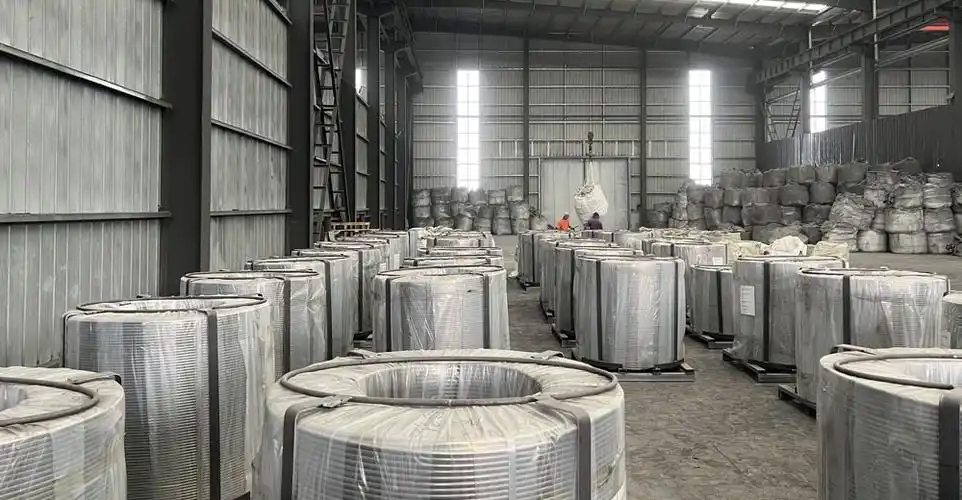
Store coils in a dry warehouse and use the oldest coils first. If a coil has been stored for more than three months, cut off the first few meters and inspect the calcium inside. If it looks dark or crumbly, discard that section.
Why JINLI GROUP Recommends Honest Advice
We sell pure calcium cored wire. We also sell CaSi and CaFe cored wire. Our goal is not to sell you the most expensive product. Our goal is to help you get the best result for your specific steel grades.
If we think CaSi cored wire would work just as well and cost less, we will tell you that. If we think pure calcium wire is necessary for your application, we will explain why. You can trust our recommendation because we do not have a financial incentive to push one product over another.
Conclusion
Pure calcium cored wire is the strongest calcium carrier available. It is necessary for very low sulfur steels, critical inclusion control applications and situations where other wires do not deliver enough calcium. But it is not the right answer for every steel grade. For ordinary carbon steels, lower concentration wires often give better value.
The key is to match the tool to the job. If you need the full power of pure calcium, use it and use it well. If you can get away with something less, do not pay for more than you need.
At JINLI GROUP, we supply all three options and we give honest advice. Contact us to discuss your steel grades, your current practice and your cost targets. We will help you make the right choice.
If you have any needs, please contact us without any hesitation!





一个回复
评论被关闭。