
Introduction
If you work in a steel plant, you have probably seen bags of magnesite products around the furnace area. Some are labelled DBM, some are labelled CCM. They look similar and they come from the same raw material, but they do completely different jobs.
Caustic calcined magnesite, often shortened to CCM, is the lighter, more reactive cousin of dead burnt magnesite. It is not for making bricks. Instead, it is used in the furnace, in the ladle and on the shop floor for jobs that need a quick, active magnesia source.
At JINLI GROUP, we supply caustic calcined magnesite to steelmakers who use it for slag conditioning, desulfurization and furnace maintenance. This article explains what caustic calcined magnesite actually does in a steel plant, how to choose the right grade and what to watch out for when you receive a shipment.
The Basic Difference Between CCM and DBM
Both caustic calcined magnesite and dead burnt magnesite start as natural magnesite, which is magnesium carbonate. The difference is in how much heat they see during processing.
Caustic calcined magnesite is calcined at around 800°C to 1000°C. This drives off the carbon dioxide but leaves the magnesia in a highly reactive, porous state. The crystals are small, the surface area is large and the material reacts quickly with slag and water.
Dead burnt magnesite is calcined at 1700°C or higher. The magnesia crystals grow large, the porosity drops and the material becomes dense and unreactive.
That difference in reactivity is the whole point. If you need a slow, steady refractory that resists slag attack, you want dead burnt magnesite. If you need a quick reaction with slag to adjust chemistry or to patch a hot spot, you want caustic calcined magnesite.
What Caustic Calcined Magnesite Does in the Furnace
In an electric arc furnace, caustic calcined magnesite has several uses. Let me walk through the main ones.
Slag conditioning is the most common application. The caustic calcined magnesite is added to the slag to raise its magnesia content. A slag that is saturated with magnesia will attack less aggressively on the furnace lining. This extends the life of your refractory bricks.
The reason you use caustic calcined magnesite rather than dead burnt magnesite for this job is speed. The reactive caustic calcined magnesite dissolves quickly into the slag, bringing the MgO level up within minutes. Dead burnt magnesite would take much longer to dissolve and might not fully assimilate before the heat is tapped.
Desulfurization is another use. A basic slag with high MgO and low FeO is good for sulfur removal. Caustic calcined magnesite helps build that slag composition quickly. The magnesium oxide reacts with sulfur through the slag, forming magnesium sulfide that can be removed.
Temperature control is a third benefit. Adding caustic calcined magnesite to the slag absorbs some heat through endothermic reactions. In a furnace that is running too hot, a CCM addition can help bring the temperature down gently without disrupting the process.
Patching and Maintenance Uses
Outside the furnace, caustic calcined magnesite is also used for quick repairs.
When a tap hole or a slag line develops a localised wear area, a mix of caustic calcined magnesite and a binder can be gunned or trowelled onto the damaged spot. The reactive magnesia bonds with the existing refractory and forms a durable patch. Because caustic calcined magnesite is porous and reactive, it reacts with water or with the binder to form a cement-like bond that sets quickly.
This is not a permanent repair, but it can extend a campaign by several heats until a more thorough reline can be scheduled. Many mills keep a stock of CCM-based gunning mix for exactly this purpose.
Choosing the Right Grade of Caustic Calcined Magnesite
Not all caustic calcined magnesite is the same. The most important distinction is the MgO content and the reactivity level.
A typical steelmaking grade of caustic calcined magnesite has 90% to 95% MgO. Grades with higher MgO are more expensive but give better results in slag conditioning. If the MgO drops below 88%, the material has too much silica and other impurities, which can make your slag worse instead of better.
Reactivity is harder to measure without a lab test, but you can see it in how quickly the material reacts with water. A highly reactive caustic calcined magnesite will heat up noticeably when mixed with water. A low reactivity material will barely change temperature. For most steelmaking applications, you want the high reactivity material because it dissolves faster in slag.
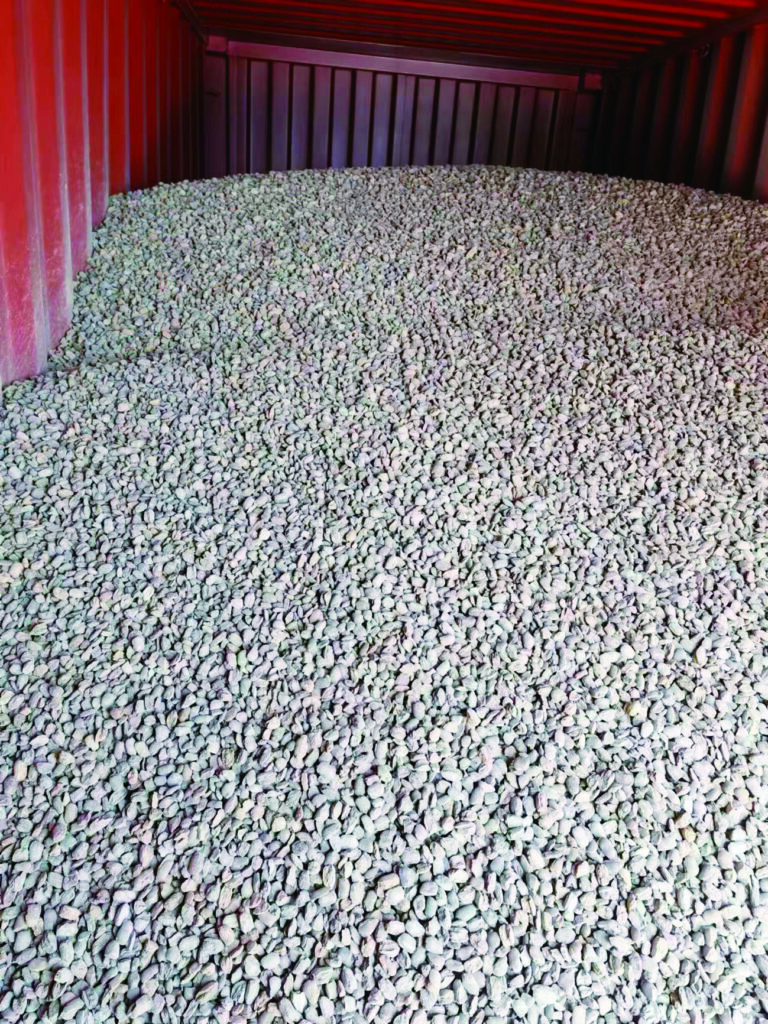
Particle size matters as well. For slag additions, a coarse material of 1 to 5 mm works well. For gunning mixes, a finer material with some dust is needed to form a good bond. If you use a coarse material in a gunning mix, it will bounce off the wall instead of sticking.
What to Check When You Receive CCM
A few simple checks on arrival can save you from a bad batch.
Firstly, check the moisture. Caustic calcined magnesite absorbs water easily. If the material feels damp or clumpy, the MgO has started to hydrate into magnesium hydroxide. That material will not perform well in slag. It may also cause expansion problems if used in patching.
Secondly, look at the colour. Good caustic calcined magnesite is white to light cream. If it is grey or has dark specks, it may have been contaminated with other materials or undercalcined. The carbon content in undercalcined material will increase your slag volume and may affect steel quality.
In addition, check the dust level. Pour a sample of CCM from a bag into a container. If a lot of fine dust comes out, the material may have been handled roughly or the particle size is not what you ordered. Too much dust means you are paying for material that will blow away in the furnace.
At JINLI GROUP, we supply caustic calcined magnesite with consistent MgO content, controlled reactivity and stable particle size. Each shipment is tested before leaving our warehouse.
Storage Precautions
Caustic calcined magnesite is not as sensitive as calcium carbide, but it still needs care. Store bags on pallets, off the concrete floor and covered with a tarp. If the bags sit on a damp floor for weeks, the material at the bottom of the bags will hydrate and become unusable.
Do not store caustic calcined magnesite near materials that react with alkalies. It is not aggressive, but the fine dust can cause irritation to skin and eyes. Standard dust control measures are adequate.
When to Choose CCM Over Other Magnesia Products
The choice between caustic calcined magnesite, dead burnt magnesite and other magnesia sources depends on the application.
If you are conditioning slag during a heat, caustic calcined magnesite is usually the best choice. It dissolves quickly and adjusts the MgO level in minutes.
If you are making bricks or ramming mixes, dead burnt magnesite is the only choice. The density and crystal size of dead burnt magnesite are essential for refractory performance.
If you are doing a gunned repair on the furnace, caustic calcined magnesite is preferred because it bonds well and sets quickly. Dead burnt magnesite does not react with binders in the same way and would not form a strong patch.
Some mills use a blend: a base layer of dead burnt magnesite refractory, with a caustic calcined magnesite based coating on top for added protection. This is a sensible way to get the best of both.
Why JINLI GROUP Supplies CCM
We supply caustic calcined magnesite because our customers need it. We do not push it as a substitute for dead burnt magnesite or the other way around. We simply offer a reliable product that meets the specifications for steelmaking grade caustic calcined magnesite.
Our material comes from established calcining plants with consistent quality. We verify the MgO content, the reactivity and the particle size before shipment. If you need a specific size or a custom bag weight, we can arrange that as well.
We also help customers who are new to caustic calcined magnesite understand how to use it. We can recommend addition rates, slag conditioning targets and simple quality checks. All of that is part of our service.
Conclusion
Caustic calcined magnesite is a simple product, but it does important work in a steel plant. It conditions your slag, extends your refractory life and provides quick repairs when needed. It is not flashy, but it is dependable when you choose the right grade and use it correctly.
The key is to match the grade to the job. High reactivity for slag conditioning, finer particle size for gunning, consistent MgO for predictable results. And store it dry.
At JINLI GROUP, we supply caustic calcined magnesite that works as expected. If you are using CCM and not getting the results you want, talk to us. We may be able to help you adjust your practice or find a better product.
If you have any needs, please contact us without any hesitation!



一个回复
评论被关闭。