A furnace lining is not a single uniform wear surface. The hot spot, the slag line, the bottom hearth and the taphole all see different temperatures, different slag compositions and different mechanical stresses. Yet many mills still buy one grade of magnesia carbon brick for the entire lining, then wonder why one zone fails long before the others.
The practice of zoning linings is not new. It began to take hold in the 1970s, when burned and impregnated magnesia brick with controlled pore size became the standard for charge pads and other high-wear areas in basic oxygen furnaces. That shift marked what industry literature describes as the beginning of the zoned lining for basic oxygen furnaces. The logic has not changed since. Different zones ask different questions of the refractory and a single brick grade cannot answer all of them equally well.
This article looks at how to apply that logic in practice: which zones deserve which brick characteristics, how to handle the bottom and taphole and what a zoning strategy actually saves over a campaign. For a broader discussion of wear mechanisms and slag coating, see our article on how to extend the life of your magnesia carbon brick lining.
Why One Brick Grade Cannot Serve the Whole Furnace
The core problem is that magnesia carbon brick properties trade off against each other. Carbon improves thermal shock resistance and reduces slag wetting, but carbon is also the component that oxidises. Higher magnesia purity improves corrosion resistance, but it costs more and may not be necessary in low-wear zones. Antioxidants protect the carbon, but they add cost and can influence how the brick behaves under heat.
A brick designed for the hot spot, with high carbon and a robust antioxidant package, is over-specified for an upper sidewall where thermal cycling from scrap charging is the main concern. Conversely, a lower-carbon brick that works well in the bottom may spall badly if placed where rapid temperature swings occur.
Zoning means accepting that the lining is a system of different materials working together, not a single product applied uniformly. Industry selection guides make the same point plainly: using one grade everywhere either wastes money on low-wear zones or under-protects the hottest spots.
Matching the Brick to the Hot Spot
The hot spot is usually the zone of most severe wear and it sets the pace for the campaign. In electric arc furnace practice, high-grade pitch or resin-bonded magnesia carbon bricks with 10–20% residual carbon are commonly used in these areas and give satisfactory performance.
What makes a brick suitable for the hot spot is not just carbon content. The quality of the magnesia grain matters just as much. Fused or high-purity sintered magnesia resists chemical attack from the highly basic slag that forms in these zones. The antioxidant package needs to be effective enough to protect the carbon from oxidation during furnace tilting and charging, when the brick surface is exposed to air.
A common mistake is to use a sidewall-grade brick in the hot spot to save cost. The saving per tonne of brick is small compared with the cost of losing the campaign early. The hot spot should get the best brick the budget can reasonably support, because it determines when the furnace comes down for relining. For guidance on what to check before a brick goes into the furnace, see our article on magnesia carbon brick quality what to look for when buying.
What the Bottom and Taphole Actually Need
The bottom hearth and taphole sit in a different stress regime. The steel bath exerts a heavy static load and the taphole sees erosion every time steel flows through it. Thermal cycling is less severe than at the hot spot, but metal penetration and mechanical wear become the dominant concerns.
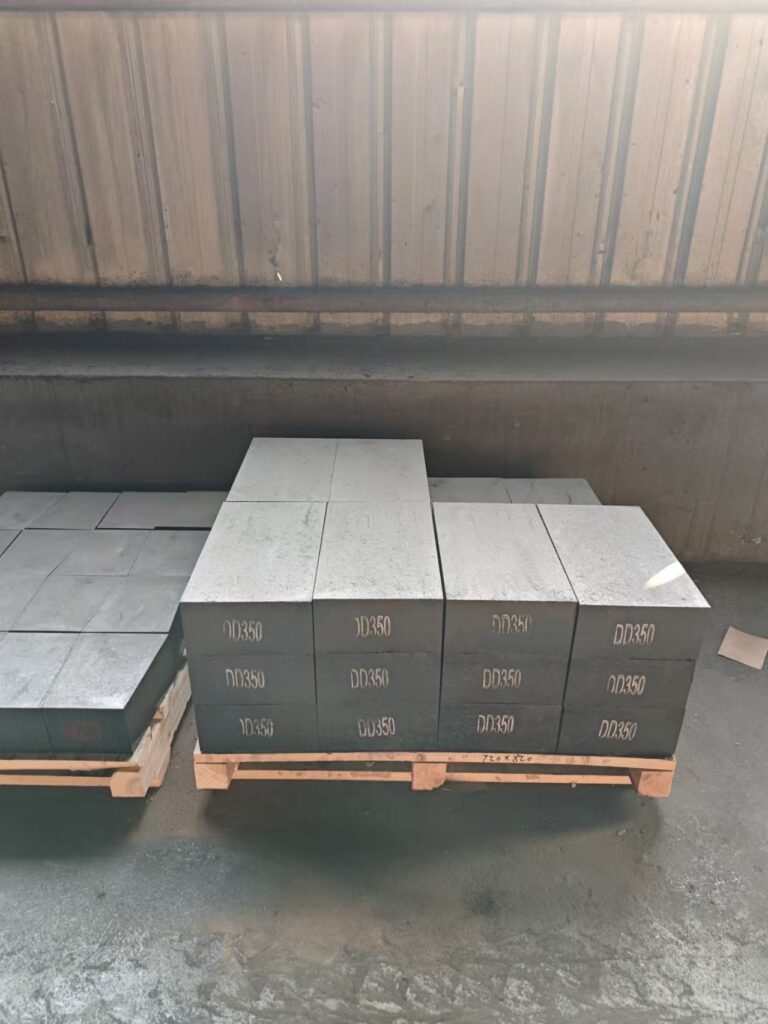
Lower-carbon magnesia carbon bricks in the 5–8% range are often appropriate for these zones. The reduced carbon content lowers the volume of oxidisable material during long idle periods, while higher density helps resist metal penetration. Selection guides commonly place 5–8% carbon bricks in bottom and permanent lining applications where oxidation resistance matters more than thermal shock resistance.
The taphole deserves special attention because it is a functional element as well as a wear lining. A taphole brick that wears unevenly can change the tapping stream, cause splashing or force an early repair. Some mills use pre-assembled taphole blocks with a grade selected specifically for erosion resistance, rather than cutting standard bricks on site.
Getting the Carbon Level Right
The slag line is the chemical battleground. Here the brick must resist both slag corrosion and oxidation at the three-phase boundary where slag, steel and refractory meet. High-carbon grades with effective antioxidant protection are the usual choice.
Above the slag line, the sidewall sees thermal cycling from scrap charging and the open furnace door. A medium-carbon grade balances thermal shock resistance against cost. The 10–14% carbon range is a common starting point for sidewalls and moderate-wear zones, while 18–20% carbon is typically reserved for trunnion areas, impact pads and hot spots where thermal shock and slag attack are most severe.
The exact carbon level for the sidewall depends on how the furnace is operated. A shop with long door-open periods and heavy scrap charging will benefit from more carbon than a shop with a stable, high-speed practice. The trend in the industry has been toward slightly lower carbon content where heat loss and oxidation resistance matter, but the hot spot and slag line still demand the higher-carbon grades.
The Financial Logic of Zoning
Zoning is not only a technical exercise. It is a cost-control decision.
By putting the most expensive, highest-performance brick only where it is needed, the average cost per tonne of lining comes down without reducing campaign life. A balanced lining assigns lower quality or less thickness to segments that receive less wear, while reserving the high-performance grades for the areas that limit the campaign.
The alternative approaches both fail in predictable ways. A single premium grade everywhere raises cost without improving the weak zones. A single cheap grade everywhere saves money on paper but usually ends with an unplanned reline when the hot spot or taphole fails.
What to Measure to Make Zoning Work
A zoning plan is only as good as the wear data behind it. Without measurement, you are guessing which zone needs which brick.
Laser profiling after tapping gives a thickness map of the lining and shows where wear is concentrated. Simple manual probes at fixed points can also work if done consistently after every campaign. The key is to record the data zone by zone and compare it with the brick grade used in each zone. Over two or three campaigns, patterns emerge that tell you whether a grade change in a specific zone is justified.
This is also where the magnesia carbon brick supplier can add value. A supplier who understands zoning can help interpret wear profiles and recommend grade adjustments. A supplier who only sells bricks by the tonne is less useful at this stage.
Conclusion
Zoning a magnesia carbon brick lining is not a new idea, but it is often applied half-heartedly. The hot spot, slag line, bottom and taphole each ask different questions of the refractory and a single brick grade cannot answer all of them equally well.
The practical approach is to start with wear data, assign the best available grade to the zone that limits campaign life and use more economical grades where the stress is lower. That is how the industry has approached lining design since the earliest zoned BOF linings and it remains the most reliable way to balance performance against cost.
If you are reviewing your lining design and want a second opinion on which zones deserve which brick characteristics, contact us. We work with mills on zoning strategy and can help you match grades to the wear profile you actually see in your furnace.
If you have any needs, please contact us without any hesitation!