Introduction
Seamless cored wire has been on the market for years. It costs more than regular welded wire and the manufacturers claim it performs better. Some mills have switched entirely. Others tried it and went back to regular wire. A few have never bothered to test it at all.
The truth is that seamless wire is not for everyone. For some mills, the extra cost is fully justified. For others, it is a waste of money. The difference comes down to storage conditions, feeding equipment, steel quality requirements and how long you keep wire before using it.
One question we hear from customers is whether the premium for seamless wire is worth paying. For a basic introduction to seamless cored wire and how it compares to regular wire, see our earlier article on the topic. This article helps you answer that question for your specific operation. We will look at who benefits most from seamless wire, what to check when you receive a shipment and when you might be better off sticking with regular wire.
The Basic Difference in Construction
Regular cored wire is made by folding a steel strip around the powder core and welding the edges. The weld runs along the entire length. It is a fast, efficient process and the product works well in most conditions.
Seamless cored wire starts with a continuous steel sheath. The sheath is filled with powder and drawn down to the final diameter. There is no weld because the sheath was never open. The entire outer surface is continuous steel.
That difference has three practical effects. First of all, seamless wire has no seam for moisture or air to enter. The core stays fresh longer. Secondly, the continuous sheath is stronger and less likely to break during feeding. Finally, the smooth surface runs more easily through the feeder guide.
For some mills, these advantages are significant. For others, they barely matter.
Who Benefits Most from Seamless Wire
Let us look at the mills where seamless cored wire makes the most sense.
Mills that store wire for long periods benefit the most. If you buy cored wire in bulk and use it over several months, the sealing advantage of seamless wire protects the calcium from moisture. Regular wire can degrade in humid storage, reducing the effective calcium content. By the time you feed the last coils, the calcium recovery may be noticeably lower than it was from the first coils.
Mills in humid coastal climates face the same issue. Even if you use wire quickly, the ambient moisture can affect regular wire. Seamless wire provides an extra layer of protection.
Mills with long, complex feeder guide systems benefit from the strength of seamless wire. If your feeder has sharp bends or long runs, the wire is more likely to break. A broken wire mid heat means lost time and lost calcium. Seamless wire is stronger and more resistant to breakage.
Mills that produce critical steel grades benefit from the consistency of seamless wire. The calcium content is more stable from coil to coil because the sealing prevents degradation. For grades where calcium control is tight, that consistency is valuable.
Mills that have experienced poor results with regular wire due to feeding problems or variable recovery may find that seamless wire solves issues they could not fix by adjusting their practice.
Who Does Not Need Seamless Wire
Now let us look at the other side. Many mills do not need the extra protection and strength that seamless wire provides.
Mills that use wire within a few weeks of delivery see little benefit from the extended shelf life of seamless wire. If your inventory turns over quickly, the calcium in regular wire does not have time to degrade.
Mills with climate controlled warehouses also see less benefit. If the storage area is dry and temperature stable, regular wire performs just as well as seamless wire.
Mills with simple, straight feeder guide systems do not need the extra strength of seamless wire. Regular wire is strong enough for most straight or gently curved feeds.
Mills that produce standard steel grades with moderate inclusion requirements do not need the extra consistency of seamless wire. Regular wire is consistent enough for carbon steel, rebar and most structural grades.
Mills that are cost sensitive may find that the premium for seamless wire is hard to justify. If you are not experiencing any problems with regular wire, switching to seamless wire may not improve your results enough to pay for the higher price.
What to Check When You Receive Seamless Wire
If you decide to try seamless cored wire, there are a few things to verify on arrival.
Firstly, check the surface. Seamless wire should be smooth and uniform, with no visible rust or pitting. Rust indicates that the sheath was damaged during storage or transport.
Then, cut a one meter sample and weigh it. Compare the weight to the specification on the certificate. A variation of more than 3% suggests inconsistent filling.
In addition, bend a short piece 90 degrees. The sheath should bend smoothly with no cracking. A cracked sheath will not protect the core properly.
What’s more, inspect the core. The powder inside seamless wire should be uniformly packed. If you see voids or uneven distribution, the filling process was not controlled.
At JINLI GROUP, we test every coil before shipping. Our certificates are accurate, but we encourage our customers to do their own incoming inspection.
How the Feeding Practice Differs
Seamless wire feeds similarly to regular wire, but there are a few differences to be aware of.
The smooth surface of seamless wire means less friction in the feeder guide. You may need to adjust the feeder tension slightly to maintain the same feeding speed.
Seamless wire is denser than regular wire because the sheath is drawn rather than folded. The weight per meter is slightly higher for the same diameter. Make sure your feeder settings account for the weight difference if you are feeding by length rather than by weight.
The sheath melts slightly differently. The continuous sheath has no weld seam, so it melts evenly. Some operators report that seamless wire gives a slightly deeper penetration because the melting is more uniform.
Storage and Handling
Seamless wire is more tolerant of moisture than regular wire, but it is not immune. The ends of the coil are still open and moisture can enter through the cut ends if they are not sealed.
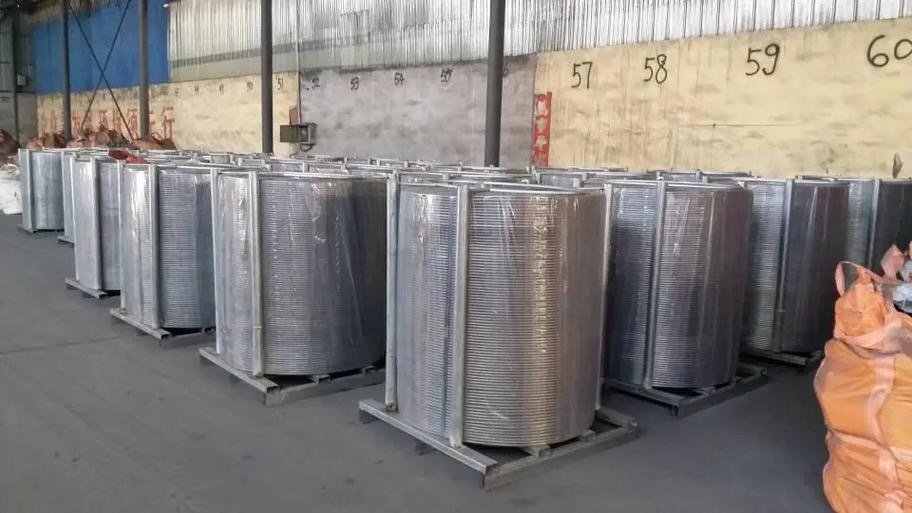
Store coils on pallets, off the concrete floor and covered with plastic sheeting. Seal the ends of any partially used coils with tape or a plastic cap. If a coil has been stored for more than six months, cut off the first few meters and inspect the core before using it.
When to Run a Trial
The best way to know if seamless wire is right for your mill is to run a trial. Order one or two coils of seamless wire and compare them against your regular wire.
Use the seamless wire on a set of heats where you have good historical data. Compare the calcium recovery, the feeding downtime, the nozzle condition and the calcium content consistency. If the results are better and the improvement justifies the extra cost, consider switching. If the results are similar, stick with regular wire.
A trial also helps you check that the seamless wire feeds smoothly through your equipment. Sometimes a small adjustment to the feeder tension or guide alignment makes a difference.
Conclusion
Seamless cored wire is a premium product for mills that need the extra sealing, strength and consistency it provides. For mills with long storage times, humid environments or critical steel grades, the premium is often worth paying. For mills that use wire quickly, store it dry and produce standard grades, regular wire is usually sufficient.
The key is to understand your own operation and run an honest comparison. A trial with a few coils will tell you whether the benefits are visible in your practice.
If you have any needs, please contact us without any hesitation!