Introduction
When most steelmakers hear dead burnt magnesite, they think of magnesia carbon bricks. That is the main use and it is where most of the material goes. But DBM has other roles in a steel plant, from gunning mixes to ramming materials to slag conditioning.
The grade of DBM you need for a brick is different from what you need for a gunning mix. The particle size, the purity and even the crystal structure all change depending on the application. Using the wrong grade for the job leads to poor performance, shorter service life and wasted money.
One question we hear from customers is whether they can use the same DBM for multiple purposes. The short answer is that you often can, but you will not get optimal results from any of them. This article covers the different uses of DBM in a steel plant, what each application requires and what to look for when you buy DBM for a specific job.
Beyond Bricks, Other Uses for DBM
Magnesia carbon bricks consume the largest volume of DBM. But there are several other applications where DBM is the material of choice.
Gunning mixes are used for patching furnace linings. The DBM is mixed with a binder and sprayed onto worn areas. The material bonds to the existing refractory and forms a durable patch. Gunning mixes need a finer DBM, typically below 1 mm, so the material flows through the nozzle and sticks to the surface.
Ramming materials are used to fill gaps and build shapes. The DBM is mixed with a binder and packed into place by ramming. These materials are used for tap hole fill, for patching large areas and for making temporary repairs. Ramming mixes need a coarser DBM with a wide particle size distribution to achieve good packing density.
Slag conditioning is another use. DBM is added to the slag to raise its magnesia content. A slag that is saturated with magnesia attacks the refractory less aggressively. This extends the life of your lining.
Castable refractories sometimes use DBM as the aggregate. These are used for monolithic linings and for precast shapes. The DBM grade for castables needs good flow properties and consistent particle size.
Each of these applications has different requirements. The DBM that works well in a brick may not work well in a gunning mix or a castable.
What Changes with the Application
The main variables that change from one application to another are particle size, purity and density.
Particle size is the most obvious difference. Bricks use a blend of coarse and fine DBM to achieve packing density. Gunning mixes use fine material for flowability. Ramming mixes use coarser material for strength. Castables need a balanced gradation.
If you use a fine gunning grade DBM in a ramming mix, the material will not pack properly. It will be too dense and may not fill the gaps. If you use a coarse ramming grade in a gunning mix, the material will bounce off the wall instead of sticking.
Purity also matters, but the level required depends on the application. Brick making needs high purity DBM, typically 97% to 98% MgO, because the bricks are exposed to severe slag attack. Gunning and ramming materials can use slightly lower purity, 95% to 96% MgO, because they are used for repairs rather than for the main lining. Slag conditioning can use even lower purity, sometimes as low as 92% MgO, because the magnesia is going into the slag anyway.
Density follows a similar pattern. Bricks need high density for slag resistance. Gunning and ramming materials need sufficient density for strength, but the requirement is less strict.
What to Check for Each Application
When you buy DBM for a specific application, here is what to focus on.
For brick making, the key checks are MgO purity, bulk density and crystal size. The certificate should show MgO above 97%, bulk density above 3.2 g/cm³ and consistent impurity levels. The particle size distribution should match your brick recipe.
For gunning mixes, the key check is particle size. The DBM should be predominantly below 1 mm, with a controlled amount of fines to help the material flow and bond. Purity is less critical but still important. Below 95% MgO, the patched area will wear faster.
For ramming materials, the key check is the particle size distribution. A wide range, from coarse to fine, gives good packing density. The material should have some coarse particles for strength and enough fines to fill the gaps.
For slag conditioning, the key check is MgO content and reactivity. The DBM should dissolve reasonably quickly in the slag. Lower purity material is acceptable, but if the impurities are too high, they can change the slag chemistry in undesirable ways.
Common Problems with DBM in Different Uses
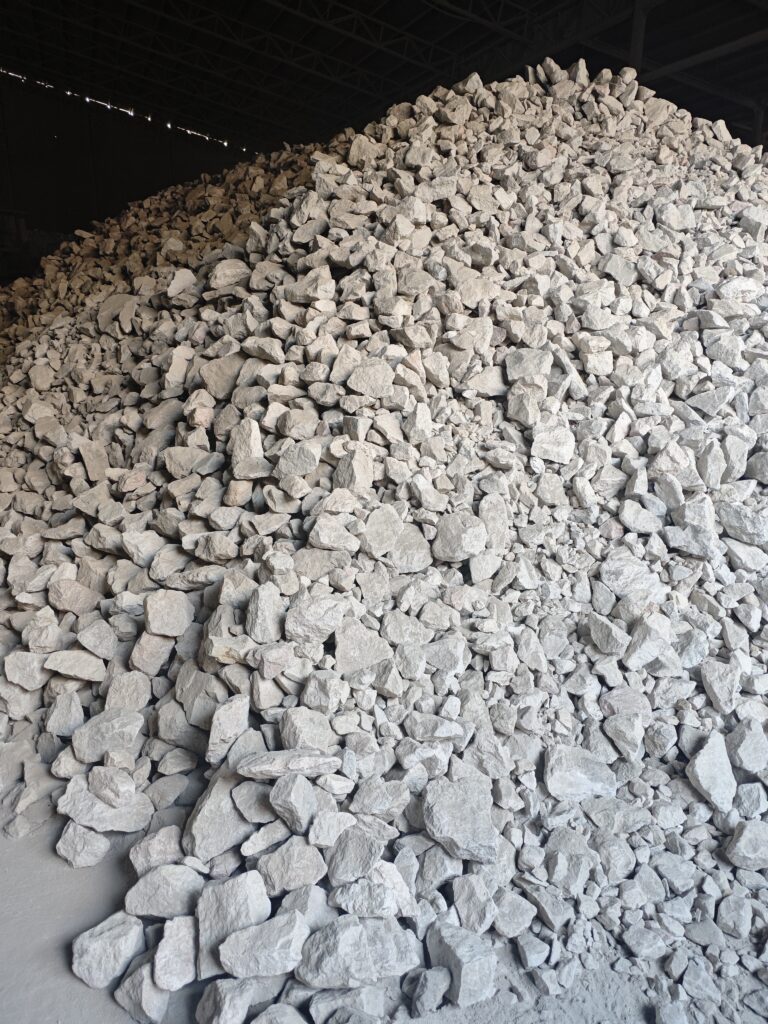
Let me share a few problems that show up when the wrong grade is used for an application.
Using brick grade DBM in gunning mix is expensive and inefficient. The brick grade is too coarse for gunning. The material will not flow through the nozzle properly and the patch will be uneven. The higher purity is wasted because the patch does not need brick grade quality.
Using gunning grade DBM in bricks is a disaster. The fine material does not provide the coarse aggregate that bricks need for thermal shock resistance. The bricks will be weak and prone to spalling.
Using slag conditioning grade DBM for ramming is risky. The lower purity material may have too many impurities, which can soften at high temperatures and cause the rammed shape to fail.
Using DBM that has absorbed moisture is a problem for all applications. Hydrated DBM expands when heated, causing cracking. Store DBM in dry conditions, regardless of the intended use.
DBM or Fused Magnesia, When to Choose Which
Fused magnesia is another source of MgO for refractories. It is made by melting magnesite in an electric arc furnace, producing larger crystals and higher purity than DBM. It is more expensive.
For the most demanding applications, such as the slag line of an EAF, fused magnesia is often preferred. The larger crystals give better slag resistance.
For sidewalls, roofs and less critical zones, DBM is usually sufficient. The cost difference is significant and DBM performs well in these areas.
For gunning and ramming materials, DBM is the standard. Fused magnesia is rarely used for these applications because the cost is too high for a repair material.
For slag conditioning, DBM is the only realistic choice. Fused magnesia would be wasted in the slag.
For a more detailed technical comparison of DBM and fused magnesia, you can refer to this overview from the refractory industry.
How to Store DBM for Different Uses
Storage requirements are similar for all DBM applications. Keep the material dry. DBM absorbs moisture slowly, but even a small amount of hydration can cause problems.
Store bags on pallets, off the concrete floor and covered with plastic sheeting. If the material is in bulk, keep the pile covered.
If DBM has been stored for a long time, check the moisture before using it. If the material feels damp or has a chalky surface, it has hydrated. Do not use it for critical applications.
Conclusion
Dead burnt magnesite is not a single product. It is a family of materials with different grades suited to different applications. The DBM that works well in a brick may not work well in a gunning mix or a ramming material.
When you buy DBM, know what you are going to use it for. Match the particle size, purity and density to the application. Check the material when it arrives. Store it dry.
If you need help sourcing DBM or verifying the quality of a shipment, talk to us. We work with reliable producers and can help you get the right grade for your specific needs.
If you have any needs, please contact us without any hesitation!