Introduction
Calcined petroleum coke is the workhorse recarburizer for steelmaking. Most steel grades that need carbon adjustment use CPC at some stage. It is cheaper than graphite, more widely available than anthracite and predictable enough for ordinary production.
But CPC is not a single product. It comes in different grades, different particle sizes and different impurity levels. The difference between a good batch and a poor one shows up in your carbon recovery, your steel chemistry and your slag volume.
At JINLI GROUP, we supply CPC to steel mills that use it for furnace and ladle carbon adjustment. This article covers the practical side: what to check when CPC arrives at your plant, how to match the grade to your addition method and what problems can show up during use.
CPC, GPC and What the Names Mean
There is often confusion between CPC and GPC. The two are different products with different price points and different applications.
CPC is calcined at around 1300°C to 1400°C. It has a crystalline structure but is not fully graphitized. It typically contains 98.5% or higher fixed carbon, with sulfur from 0.3% to 0.8% and nitrogen from 300 to 800 ppm.
GPC is heated above 2500°C. The high temperature aligns the carbon into a graphitic structure. This lowers the sulfur to below 0.05%, the nitrogen to below 100 ppm and makes the carbon dissolve faster. For a detailed comparison of CPC and GPC, see our article on graphitized petroleum coke.
For most carbon steels, structural steels and rebar grades, CPC is the right choice. For steels with tight nitrogen or sulfur specifications, GPC may be required.
What to Check on a CPC Certificate
When you receive a CPC shipment, the certificate gives you the basic chemistry. But not all numbers are equally important. Here is what to look for.
Fixed carbon should be 98.5% or higher. Anything below 98% means more volatile matter or ash, both of which are undesirable. Fixed carbon is what you are paying for.
Sulfur content matters because sulfur from CPC adds to the total sulfur in the steel. If your steel grade has a tight sulfur spec, choose a CPC with lower sulfur. High sulfur CPC, above 0.8%, is only suitable for cast iron or very dirty steel practices.
Nitrogen content affects steel quality. For drawing quality steels, pipe grades or any steel that requires good ductility, high nitrogen can cause strain aging and surface defects. A CPC with nitrogen below 300 ppm is preferred for these applications.
Ash content contributes to slag volume. Every kilogram of ash becomes slag that you have to manage. Higher ash means more slag, which costs energy and consumes flux.
Moisture is rarely high in well packed CPC, but if the shipment has been exposed to rain, the moisture content will be elevated. Wet CPC causes hydrogen pickup, which is harmful for many steel grades.
Choosing the Right Particle Size
CPC is available in different size ranges. The right size depends on your addition method and your dissolution time.
Fine CPC, below 1 mm, is used for injection systems or for addition through a lance. The small particles dissolve quickly, which is an advantage for ladle additions with short treatment time. But fines can also oxidize in the air or float on the slag. Dust losses can be 5% to 10% if the material is not handled carefully.
Medium CPC, 1 to 5 mm, is the most common size for ladle and furnace additions. The particles are small enough to dissolve within a few minutes but large enough to avoid excessive dust. This is the standard size for most steelmaking practices.
Coarse CPC, 5 to 10 mm, is used for furnace additions with long residence time. The larger particles dissolve more slowly but are less likely to be lost to the dust collector. Coarse CPC is also used in cupola operations.
A wide particle size distribution is a problem. If the CPC contains both fine dust and large lumps, the fines will dissolve quickly and the lumps may not dissolve fully before casting. A narrow size distribution gives more consistent recovery.
Quality Checks You Can Do on Arrival
The certificate is a starting point. A few simple checks on the shop floor can catch problems before they affect your steel.
Check the particle size distribution. Take a sample of CPC and sieve it. If you do not have sieves, at least visually check the proportion of fines and oversize. More than 10% below 0.5 mm means too many fines. More than 5% above 8 mm means too many coarse particles.
Check the dust content. Pour some CPC onto a white paper and shake it. If a lot of fine dust settles on the paper, the material has been handled roughly and has accumulated dust. Dusty CPC will have lower recovery because the fines oxidize before dissolving.
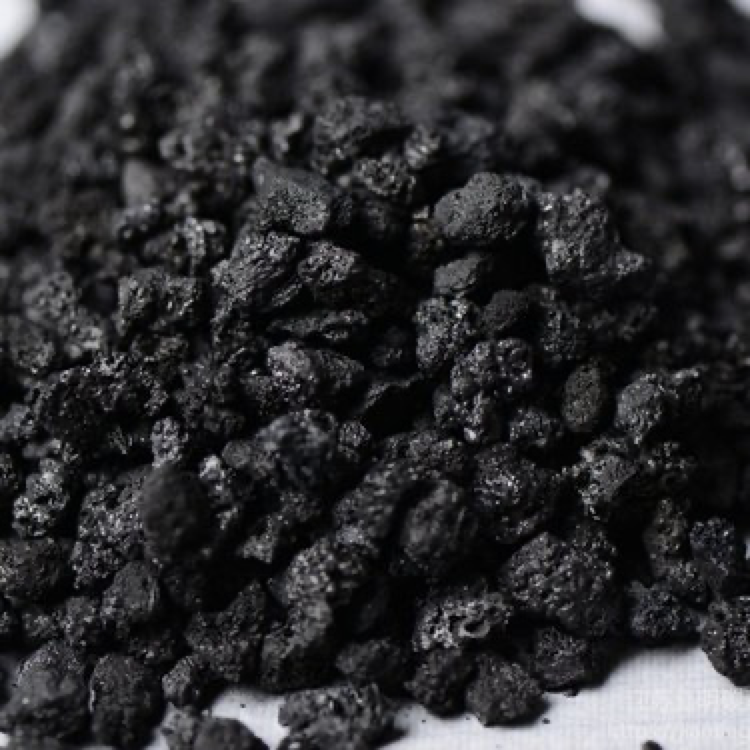
Check the appearance. Good CPC is dark grey to black with a slightly shiny surface. If it looks dull or has white particles mixed in, it may be contaminated with ash or other materials.
Check the moisture. Take a handful of CPC and squeeze it. If it feels damp or clumps together, the moisture is too high. Moisture causes hydrogen pickup in the steel and reduces recovery.
At JINLI GROUP, we test every batch of CPC before shipping. Our certificates are accurate, but we encourage our customers to do their own incoming inspection.
What Can Go Wrong During Use
Even good CPC can cause problems if it is not used correctly. Here are the most common issues.
Low carbon recovery. If your carbon recovery is consistently below 80% for furnace additions or below 70% for ladle additions, check two things. Firstly, the CPC may be too fine and oxidizing in the air. Secondly, the addition may be too late, leaving insufficient time for dissolution.
Sulfur pickup. If your sulfur comes out higher than expected, check the sulfur content of the CPC. The certificate might have been for a different batch. Test the sulfur yourself.
Nitrogen pickup. If your nitrogen is high, the CPC may be the source. High nitrogen CPC can add 10 to 20 ppm nitrogen to the steel. If that is a problem, switch to a lower nitrogen grade or use GPC.
Slag volume increase. If you notice more slag than usual, the ash content of the CPC may be higher than stated. High ash CPC also tends to have lower fixed carbon. Check the certificate again.
Hydrogen pinholes. If you see pinholes in the final steel, moisture from CPC could be the cause. Damp CPC releases hydrogen when it contacts molten steel. Dry the material or reject damp shipments.
Storage and Handling
CPC is not as reactive as some other steelmaking additives, but it still needs care.
Store bags on pallets, off the concrete floor and covered with a tarp. Keep the material dry. Wet CPC can cause hydrogen pickup and the moisture also makes the material harder to handle because it clumps.
If you receive CPC in bulk, do not leave the pile exposed to rain. Cover it immediately after delivery. If the material has been rained on, it is usually better to reject it than to try to dry it.
When CPC Is the Right Choice
CPC is the most common recarburizer for a reason. It works well for most steel grades and most addition methods.
Use CPC for carbon steels, structural steels, rebar, sections and many flat products. Use CPC for furnace additions with long residence time. Use CPC for ladle additions with sufficient time for dissolution.
Switch to GPC only when you need very low nitrogen, very low sulfur or very fast dissolution. For the majority of steel production, CPC is the most cost effective choice.
Conclusion
Calcined petroleum coke is a reliable, cost effective recarburizer for most steelmaking applications. The key is to choose the right grade for your steel specification, check the material when it arrives and use it correctly in your practice.
Pay attention to particle size. Too many fines or too many lumps will affect recovery. Check the sulfur and nitrogen levels if your steel has tight specifications. Keep the material dry to avoid hydrogen pickup.
At JINLI GROUP, we supply CPC and other steelmaking additives that meet consistent specifications. We can help you set up an incoming inspection process, compare different grades and optimize your addition practice. If you want to get more value from your recarburizer, talk to us.
If you have any needs, please contact us without any hesitation!