Introduction
You have a coil of calcium cored wire on the wire feeding machine. The steel is ready. You press start. The wire goes in, there is the familiar white flash and the heat continues. But did you get the calcium effect you paid for? On some heats, yes. On others, maybe not.
At JINLI GROUP, we have watched hundreds of calcium cored wire feeding operations across different mills. The difference between good and poor recovery often comes down to a few manageable details. This article is not about theory. It is about what you can change tomorrow to get more value from your calcium cored wire.
The One Number That Matters
Forget about the calcium percentage on the certificate for a moment. The real measure is calcium recovery —— how much of what you fed actually does useful work inside the steel. In many shops, recovery from pure calcium cored wire varies between 10% and 25%. That is a huge range. A heat with 10% recovery gives you less than half the effective calcium of a heat with 25%, even though you used the same amount of wire.
Why such a spread? Because calcium is difficult. Its low boiling point means it wants to become a gas. Whether it succeeds or whether it dissolves and reacts, depends on several factors you can control.
The Depth Rule
Let me start with the most common mistake. Shallow feeding. If your calcium cored wire only goes down one meter below the slag surface, most of the calcium will bubble up through the slag and burn in air. You get smoke, not inclusion modification.
The effective zone starts at about two and a half meters deep. At that depth, the ferrostatic pressure is enough to keep calcium in liquid form longer. It can dissolve and react with sulfur and alumina before turning into bubbles.
How do you know if you are deep enough? Watch the ladle surface during feeding. A deep, quiet entry with only small bubbles is good. A lot of spattering and large white clouds means the wire is melting too high. Adjust your guide tube angle. Make it steeper. If your wire feeder has a fixed tube, consider modifying the support to point more vertically.
One more thing on depth: the slag thickness matters. If your slag is more than 100 mm thick, you need to go even deeper. The calcium has to get through the slag without reacting with it. Thick, viscous slag is a barrier. Reduce slag thickness before feeding if you can or use a longer guide tube.
Speed Matters More Than You Think
Feed speed is another lever that many operators ignore. Too slow, the calcium cored wire melts before reaching depth; Too fast, the wire may punch through the bottom or break inside the ladle.
A good starting range for pure calcium wire is 2.5 to 4 meters per second. But the optimal speed depends on your steel temperature. Hotter steel melts the steel sheath faster, so you need higher speed to get deep enough before the calcium releases.
Here is a practical method. Run a short test length —— say five meters at your usual speed. Then check the remaining end. If the end is less than 200 mm, you are feeding too fast; the wire is not melting enough. If the end is longer than 500 mm, you are feeding too slow; the wire is melting too high. Adjust until the end length falls between 200 and 400 mm. That is your speed.
Keep records. You will find that optimal speed changes with tap temperature and ladle size.
What to Do When Recovery Drops
Every mill has days when calcium recovery seems to fall off a cliff. Before you blame the wire, check these three things in order.
Firstly, look at the deoxidation practice before feeding calcium. If there is still free oxygen in the steel, the calcium will react with oxygen first, forming calcium oxide. That does not help with inclusion modification. Ensure your aluminum addition is sufficient and has had time to work. A quick oxygen activity check, anything above 10 ppm is too high —— tells you to wait.
Secondly, check your slag chemistry. High FeO or MnO in the slag will eat calcium. The slag should be white or gray, not black. If it is black, reduce FeO by adjusting your oxygen blow or adding a deoxidant like aluminum to the slag before feeding calcium.
Thirdly, look at the wire itself. If the steel strip is rusty or the seam is not fully sealed, moisture or air may have oxidized some of the calcium before it even enters the steel. A simple test: cut a one-meter piece from a new coil and inspect the cut end. The calcium inside should be bright and metallic, not dark or powdery.
How to Judge Calcium Cored Wire Quality Without a Lab
You do not always have time to wait for chemical analysis. Here are three quick checks you can do on the shop floor.
The bend test. Take a short piece of calcium cored wire and bend it 90 degrees. A good wire will bend smoothly with no cracking of the steel sheath. A poor wire, one with poor welding or thin spots, will crack or split open.
The weight consistency test. Cut three one-meter lengths from different parts of the coil. Weigh each piece. A good coil will have less than 3% variation. If one meter is 380 grams and another is 350 grams, the core filling is uneven. That leads to inconsistent calcium addition heat to heat.
The drop test. Hold a piece of wire about one meter above a concrete floor and drop it. And then, listen. A solid thud means the core is dense. A rattling sound means the calcium powder has settled or there are voids. Avoid that coil.
At JINLI GROUP, we pass these tests before shipping. But we also encourage you to do your own checks on arrival. It is your money.
Feeding Sequence for The Best Results
The order of additions matters. Many mills add calcium cored wire at the very end of ladle treatment, right before casting. That is fine. But there is a better sequence for tricky grades.
First of all, deoxidize with aluminum. Let the ladle argon stir for two to three minutes. Then add any other alloys except calcium. Then, feed the calcium cored wire. After feeding, stir for one more minute to distribute the calcium evenly. Then cast immediately. Long holding times after calcium feeding allow inclusions to re-agglomerate, which can bring back clogging problems.
For desulfurization, feed calcium earlier, after the slag has been made basic. The calcium will react with sulfur to form CaS. Then let the slag absorb it. For inclusion modification, feed later, closer to casting.
Some mills try to do both with one calcium addition. That works only if the sulfur level is already low. If you have more than 0.02% S, consider a two-step approach: first a desulfurization pass with calcium, then a slag change or skimming, then a second pass for inclusion modification. It costs more in wire but saves nozzle life.
A Note on Calcium Cored Wire Storage
Calcium is reactive. It does not like moisture. If your coils sit on a damp concrete floor for weeks, the calcium at the outer layer of the core will turn into calcium hydroxide. That material does not help your steel. Worse, the reaction generates heat and hydrogen.
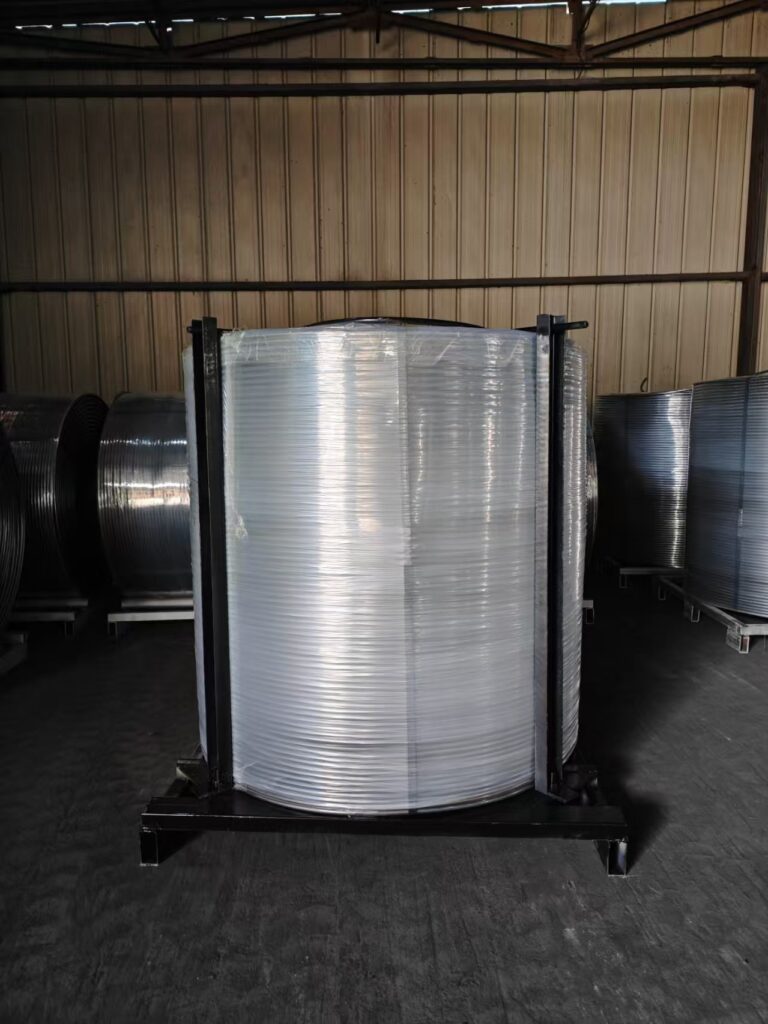
Store coils on wooden pallets, covered with plastic sheeting, in a dry warehouse. Use older coils first. If a coil has been stored for more than three months, cut off the first five meters and inspect the calcium inside. If it looks dark or crumbly, discard that length.
When to Switch to a Different Wire
Pure calcium cored wire is not always the answer. If you consistently get low recovery despite good feeding practice or if your steel has very tight silicon specifications, stay with pure calcium. But for many mills, a switch to calcium silicon or calcium iron cored wire improves consistency. We have covered those options in other articles.
However, if you need the strongest possible calcium effect, for very low sulfur or for certain specialty grades, pure calcium is still the tool. The key is to use it well.
Why JINLI GROUP for Your Calcium Cored Wire
We have been making and exporting calcium cored wire for years. Our product is straightforward: uniform core density, clean calcium, strong steel strip and consistent coiling. But what we really offer is the support to help you use it right.
We can help you run a feeding optimization trial, compare recovery across different coils or troubleshoot a specific ladle problem. That service comes with the wire, not as an extra charge.
If you are unhappy with your current calcium cored wire performance, try a sample coil from us. Run your own tests. We are confident you will see a difference, either in recovery, in feeding consistency or in nozzle life.
Conclusion
Calcium cored wire is a powerful tool, but it demands respect. The difference between mediocre and excellent results is not magic, it is depth, speed, slag control and wire quality. You can improve all of these starting tomorrow.
If you want to get more from your calcium cored wire, start by measuring your current recovery. Then make one change at a time. Keep records. And if you need a supplier who cares about your results as much as you do, talk to JINLI GROUP.
We are ready to help you make better steel, one heat at a time.
If you have any needs, please contact us without any hesitation!