Caustic calcined magnesite looks like a simple product. It is a white powder or granule and the specification usually shows 90% to 95% MgO. Most buyers assume that if the MgO is right, the material will work. That assumption leads to disappointment more often than you might expect.
Two batches of caustic calcined magnesite with identical MgO content can behave very differently in the furnace. One dissolves quickly in the slag and raises the MgO level within minutes. The other sits on the surface, reacts slowly and barely changes the slag chemistry. The difference is not visible on the certificate.
This article explains what causes that variation, what to check beyond the MgO number and how to avoid buying material that will not perform. For a broader introduction to what caustic calcined magnesite does in a steel plant, see our article on what caustic calcined magnesite does in your steelmaking practice. This article focuses on the quality question.
Calcination Temperature Problem
The single biggest cause of variation in caustic calcined magnesite is the calcination temperature. Magnesite must be heated to drive off carbon dioxide and convert the magnesium carbonate into magnesium oxide. The temperature at which this happens determines the properties of the final product.
At the low end, around 700°C to 800°C, the magnesia is highly porous and reactive. It dissolves quickly in slag, which is what you want for slag conditioning. But it also absorbs moisture readily, which makes storage difficult.
At the high end, around 1000°C to 1100°C, the magnesia crystals begin to grow and the porosity decreases. The material is still reactive enough for most steelmaking uses, but it dissolves more slowly. Some suppliers push the temperature higher to reduce moisture absorption and improve shelf life. That improves storage but reduces reactivity.
The problem is that two suppliers can both claim a calcination temperature of 900°C and still produce very different materials. The actual temperature profile inside the kiln, the residence time and the cooling rate all affect the final product. A certificate that lists only MgO tells you nothing about any of this.
What to Check Beyond MgO
Since the certificate does not tell the whole story, you need to look at other indicators.
Loss on ignition is one of them. It measures the weight loss when the material is heated to a high temperature. A high loss on ignition suggests the magnesite was not fully calcined or that it has absorbed moisture during storage. Both are problems.
Reactivity is the most direct indicator of how the material will behave in slag. It is usually measured by the citric acid reactivity test or the iodine absorption test. A high reactivity number means the magnesia will dissolve quickly. A low number means it will dissolve slowly. For slag conditioning, you want high reactivity.
Particle size distribution matters as well. Even if the chemistry is perfect, a material with too many fines will blow away in the furnace. Too many coarse particles will dissolve slowly. A well graded material gives the best balance.
Bulk density tells you something about the porosity. A low bulk density means high porosity, which usually means high reactivity. A high bulk density means low porosity and lower reactivity. Neither is inherently better. It depends on the application.
Moisture Absorption Issue
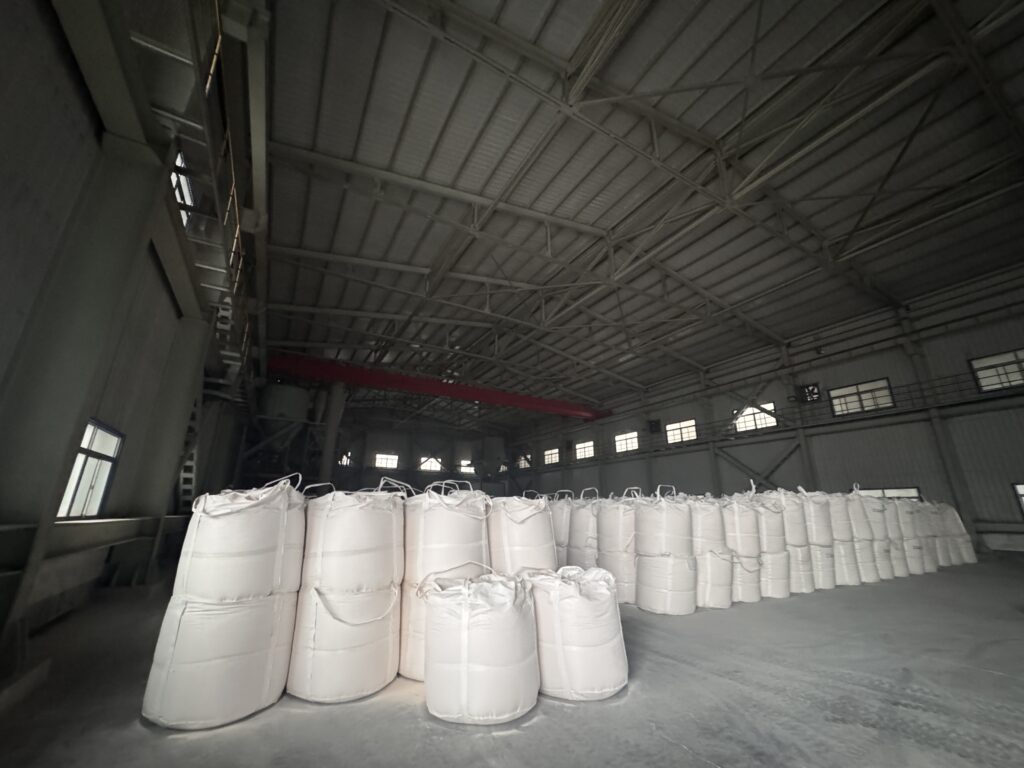
Caustic calcined magnesite is hygroscopic. It absorbs moisture from the air. When it does, the magnesium oxide converts to magnesium hydroxide. That reaction is accompanied by a volume expansion, which can cause the material to swell and crack. In the furnace, hydrated magnesia behaves differently from fresh material. It may not dissolve properly and it can introduce hydrogen into the steel.
The problem is that moisture absorption happens during storage and transport, not just at the supplier’s plant. A material that leaves the factory in perfect condition can arrive at your site in poor condition if the packaging is inadequate or the journey is long.
To protect against this, check the packaging. Good caustic calcined magnesite is supplied in moisture proof bags or lined bulk bags. If the bags are torn or the liner is damaged, the material inside may have absorbed moisture. Test the moisture content on arrival, especially if the shipment has been in transit for several weeks.
How to Test Quality on Arrival
You do not need a full laboratory to catch quality problems. A few simple checks will tell you most of what you need to know.
Fresh caustic calcined magnesite is white to light cream. A grey or brown tint suggests contamination or undercalcination. Dark specks may be unburnt magnesite or foreign material.
If the material has clumped together in the bag, moisture has entered. Clumps that break easily under light pressure are less serious than hard lumps, but both indicate a problem.
If you have the equipment, do a simple citric acid reactivity test. If not, you can at least compare the current batch to a previous batch that you know performed well. A noticeable difference in how quickly the material reacts with water is a warning sign.
Take a known volume and weigh it. If the weight is significantly different from previous batches, the density or the moisture content has changed. Either one affects performance.
Using Caustic Calcined Magnesite Effectively
Once you have good material, use it correctly. Add it to the slag early in the heat, when the slag is still forming. That gives the magnesia time to dissolve and raise the MgO level before the slag becomes too viscous.
Do not store caustic calcined magnesite for long periods. Use older stock first. If you have to store it, keep it in a dry warehouse, on pallets, covered with plastic. Open bags should be resealed or used promptly.
If you are using the material for gunning or patching, note that reactivity is less critical. A slightly less reactive material may actually work better because it sets more slowly and gives you more working time. Contact us if you need help selecting the right grade for your application.
Conclusion
Caustic calcined magnesite quality is not just about the MgO number. The calcination temperature, the reactivity, the particle size and the moisture content all affect how the material performs in your furnace. Two batches with the same certificate can behave very differently.
Check the reactivity, not just the chemistry. Inspect the material on arrival for clumping and colour changes. Ask your supplier the right questions. And use the material correctly, adding it early in the heat when the slag is still forming.
If you are not getting the results you expect from your caustic calcined magnesite, talk to us. We can help you identify the problem and find a material that performs consistently.
If you have any needs, please contact us without any hesitation!